

The Importance of the Patient History
A detailed patient history is one of the most important components of clinical evaluation. In many cases, it provides critical insight into underlying physiologic dysfunction before formal testing begins.
Why the Patient History Is Critical
At NeuroSport, the patient history is used to guide clinical reasoning, prioritize testing, and identify contributing factors that may not be immediately apparent through objective measures alone.
Patient history is crucial in healthcare because it guides up to 90% of diagnoses, ensures patient safety, and facilitates personalized care. It forms the foundation for accurate diagnoses, prevents medication errors, highlights family risks, and establishes crucial trust between the patient and provide
Key Elements of the Patient History
A structured history focuses on identifying patterns across multiple systems:
Symptom onset and progression
Triggers (standing, exertion, heat, stress)
Cardiovascular responses (heart rate, dizziness, fatigue)
Neurologic symptoms (brain fog, headaches, visual disturbance)
Musculoskeletal factors (neck pain, prior injury)
Prior diagnoses and treatments
Activity tolerance and recovery patterns
Clinical Workflow
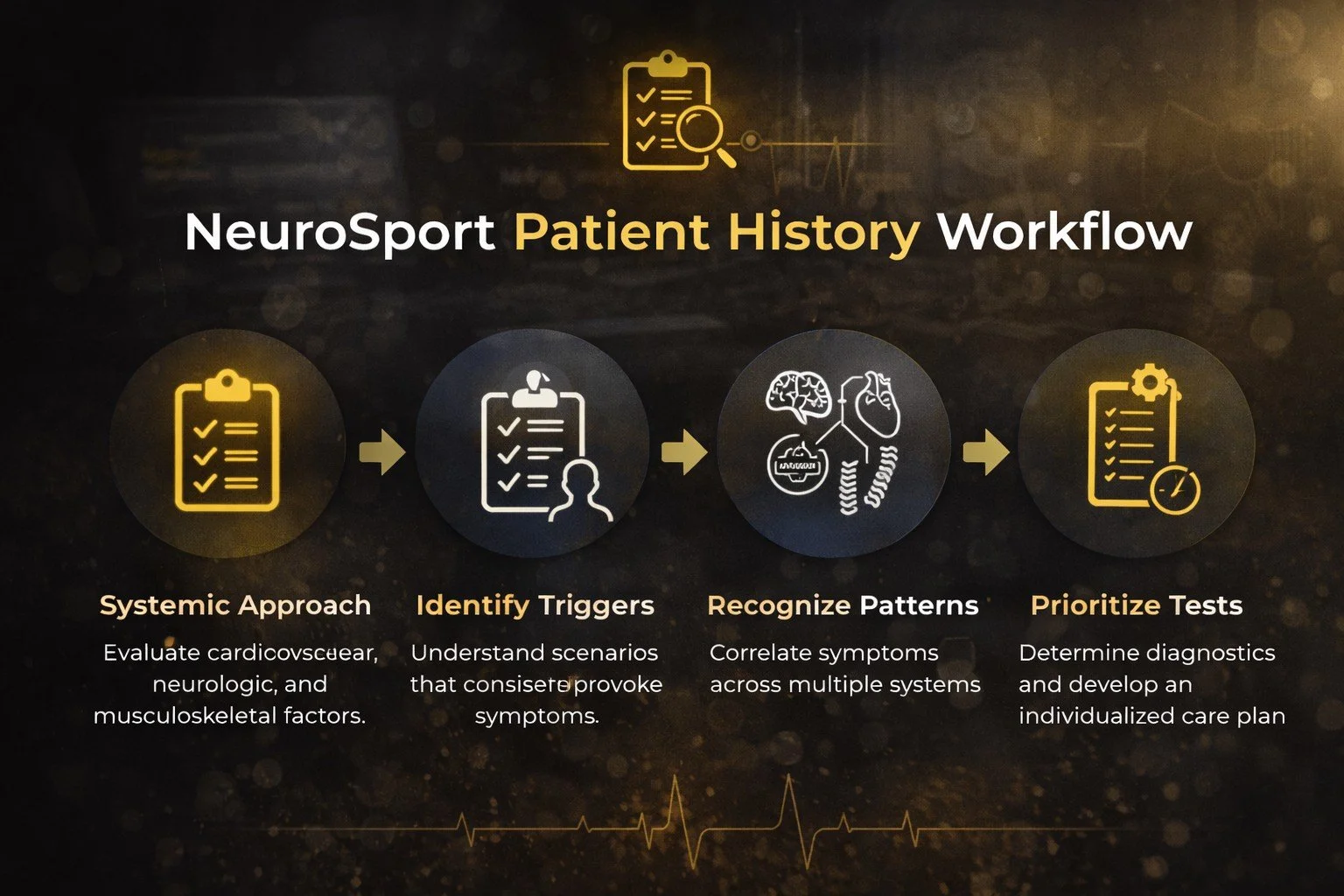
Identifying Patterns Across Systems
Many patients present with symptoms that appear unrelated. However, when viewed collectively, patterns often emerge that point toward underlying autonomic dysfunction, post-concussion physiology, or combined biomechanical contributors.
For example:
Dizziness when standing
Fatigue with minimal exertion
Brain fog and difficulty concentrating
These patterns can indicate dysfunction of the neurocardiac axis rather than isolated symptoms.
How History Guides Clinical Evaluation
How History Guides Clinical Evaluation
Information gathered during the patient history directly informs:
Selection of appropriate tests (e.g., NASA Lean Test)
Identification of contributing systems
Differentiation between primary and secondary causes
Development of an individualized care plan
History to Targeted Care
Understanding the full clinical picture allows for targeted, efficient care. Rather than treating isolated symptoms, evaluation focuses on identifying the underlying drivers of dysfunction and guiding appropriate intervention.
Schedule a Comprehensive Evaluation
If you are experiencing persistent or unexplained symptoms, a detailed clinical history is the first step in identifying the underlying cause and developing a structured plan for recovery.