

Spine Management: Targeted Chiropractic Care for Back Pain, Disc Injury, Headache, and Neurologic Symptoms
Spine pain is not always just a pain problem.
In many patients, dysfunction of the cervical, thoracic, or lumbar spine can contribute to headaches, arm or leg symptoms, dizziness, reduced mobility, and persistent mechanical pain. At NeuroSport, spine management is designed to identify the specific spinal contributors to symptoms and apply targeted chiropractic care to improve function, reduce irritation, and support recovery.
Our approach is structured, individualized, and grounded in clinical evaluation rather than one-size-fits-all treatment.
What We Mean by Spine Management
Spine management refers to the evaluation and treatment of mechanical and functional problems involving the spine and related soft tissues. This may include joint restriction, disc-related irritation, muscle guarding, postural strain, movement dysfunction, and spinal contributions to neurologic symptoms.
Rather than chasing symptoms blindly, the goal is to determine whether the spine is playing a meaningful role in the patient’s presentation and, if so, how to address it in a targeted and clinically appropriate way.
Symptoms That May Have a Spinal Contributor
Spinal dysfunction can contribute to a wide range of symptoms, including:
Neck pain or back pain
Pain between the shoulder blades
Headaches, especially cervicogenic patterns
Arm pain, numbness, or tingling
Leg pain, including sciatic-type symptoms
Stiffness with turning, bending, or lifting
Pain with prolonged sitting, standing, or activity
Recurrent flare-ups after exercise, work, or travel
Dizziness or disequilibrium when the cervical spine is involved
Neurologic symptoms that appear to worsen with mechanical stress
Not every symptom is coming from the spine, and that is exactly why a detailed evaluation matters. The spine is sometimes the driver, sometimes a contributor, and sometimes just an innocent bystander getting blamed for the crime.
Common Conditions We Evaluate
At NeuroSport, spine management may be part of care for patients with:
Mechanical neck pain
Mechanical low back pain
Cervicogenic headache
Thoracic pain and postural strain
Disc-related pain syndromes
Radicular or radicular-like symptoms
Sciatic pain
Whiplash-associated disorders
Sports-related spine injuries
Persistent spinal symptoms after motor vehicle collisions
Spine-related dysfunction contributing to prolonged recovery
Why the Spine Matters
The spine is more than a stack of bones.
It is a dynamic system involving joints, discs, muscles, ligaments, nerves, and sensorimotor input to the brain. When spinal structures are irritated or not moving well, they can contribute to pain, protective muscle tension, altered biomechanics, reduced activity tolerance, and in some cases headache or neurologic symptoms.
The cervical spine is especially important because dysfunction in this region may contribute to cervicogenic headache, dizziness, and symptoms that overlap with concussion or post-traumatic presentations. The lumbar spine can also influence leg pain, movement tolerance, and functional limitations in work, exercise, and daily activity.
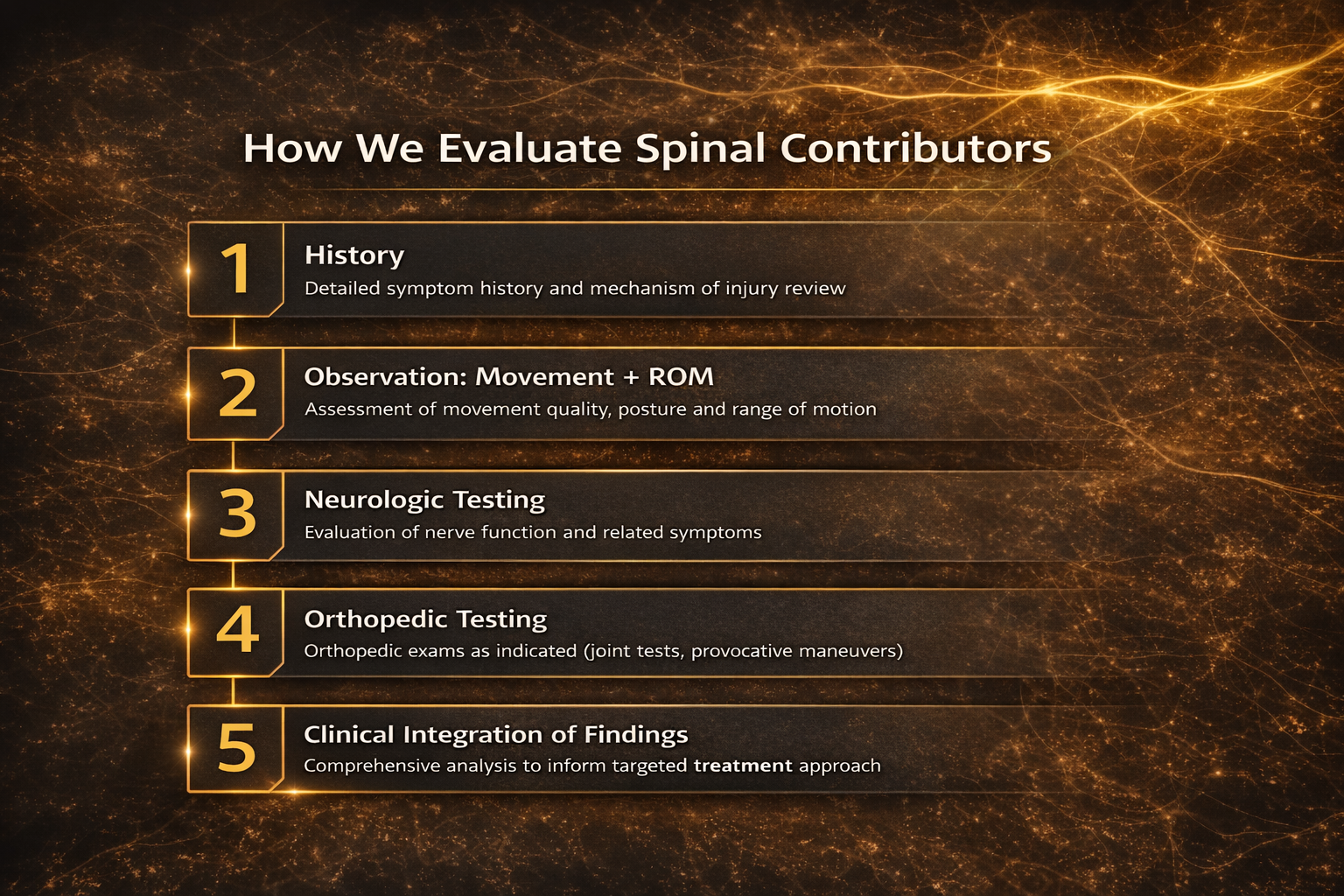
How We Evaluate Spinal Contributors
A proper spine evaluation should not begin and end with “Does this hurt?” That is barely a warm-up.
The NeuroSport process helps determine whether symptoms are primarily mechanical, disc-related, neurologic, post-traumatic, or influenced by overlapping factors.
The diagnostic outcome is dependent upon following a through clinical process
Our Treatment Approach
Treatment is guided by findings, not by routine.
Depending on the patient presentation, spine management may include:
Targeted chiropractic spinal manipulation when appropriate
Spinal mobilization
Soft tissue treatment
Movement-based rehabilitation
Postural and ergonomic strategies
Activity modification
Home exercise instruction
Coordination with other providers when indicated
Care is tailored to the individual rather than forced into a generic protocol. Some patients respond well to focused manual care. Others require a combined strategy that addresses mobility, strength, irritation sensitivity, and graded return to activity.
Disc Injury and Spine-Related Symptoms
Disc injuries can produce very different clinical pictures depending on the region involved and the structures affected. Some patients present with local pain only. Others may develop referred pain, radicular symptoms, muscle guarding, or loss of function.
Spine management in disc-related cases focuses on identifying aggravating patterns, reducing mechanical stress, improving motion where appropriate, and supporting recovery through a structured plan. Treatment is selected carefully based on history, examination findings, irritability level, and overall presentation.
Not every disc problem needs aggressive treatment, and not every scan with a scary word explains the patient’s symptoms. Imaging loves drama. Clinical correlation is what pays the bills.
Cervicogenic Headache and Neurologic Symptoms
Headache and neurologic complaints are not always primary brain problems.
In some patients, the cervical spine can contribute to headache, visual discomfort, dizziness, upper extremity paresthesia, or a general sense that something is “off” with head and neck movement. This is especially relevant after trauma, prolonged desk work, repetitive strain, or sports injury.
When the clinical picture supports a spinal contribution, targeted chiropractic care may help reduce the mechanical driver and improve overall function.
Individualized Care Matters
No two spine cases are exactly the same.
A patient with low back pain after lifting, a patient with chronic neck pain and headaches, and a patient with post-traumatic dizziness and cervical restriction may all have spinal involvement, but they should not be treated like clones from the same bargain-bin template.
At NeuroSport, care plans are individualized based on:
Region involved
Severity and irritability of symptoms
Neurologic findings
Functional limitations
Injury history
Response to prior treatment
Coexisting concussion, autonomic, or musculoskeletal issues
When to Seek a More Detailed Evaluation
A more detailed spinal evaluation may be appropriate if:
Pain is persistent or recurrent
Symptoms are worsening
There is arm or leg numbness, tingling, or weakness
Headaches appear linked to neck pain or neck movement
Symptoms have not improved with standard care
You are recovering from injury but still feel mechanically limited
Back or neck symptoms are interfering with work, exercise, sleep, or daily function
Clinical Goals
The goals of spine management is not simply to “crack the back.”
The clinical goals are:
Identify the pain generator
Detect if there are meaningful spinal contributors to symptoms
Improve function
Reduce pain
Restore more normal movement and
Help patients return to activity with better stability and less symptom provocation.
Not improving with standard care?
We identify the actual driver of your symptoms.
Need a more detailed evaluation of neck pain, back pain, disc-related symptoms, or cervicogenic headache?
NeuroSport provides targeted, evidence-guided spine evaluation and chiropractic care designed to identify the true drivers of symptoms and guide individualized treatment.
Book an appointment
Call 360-325-2121