

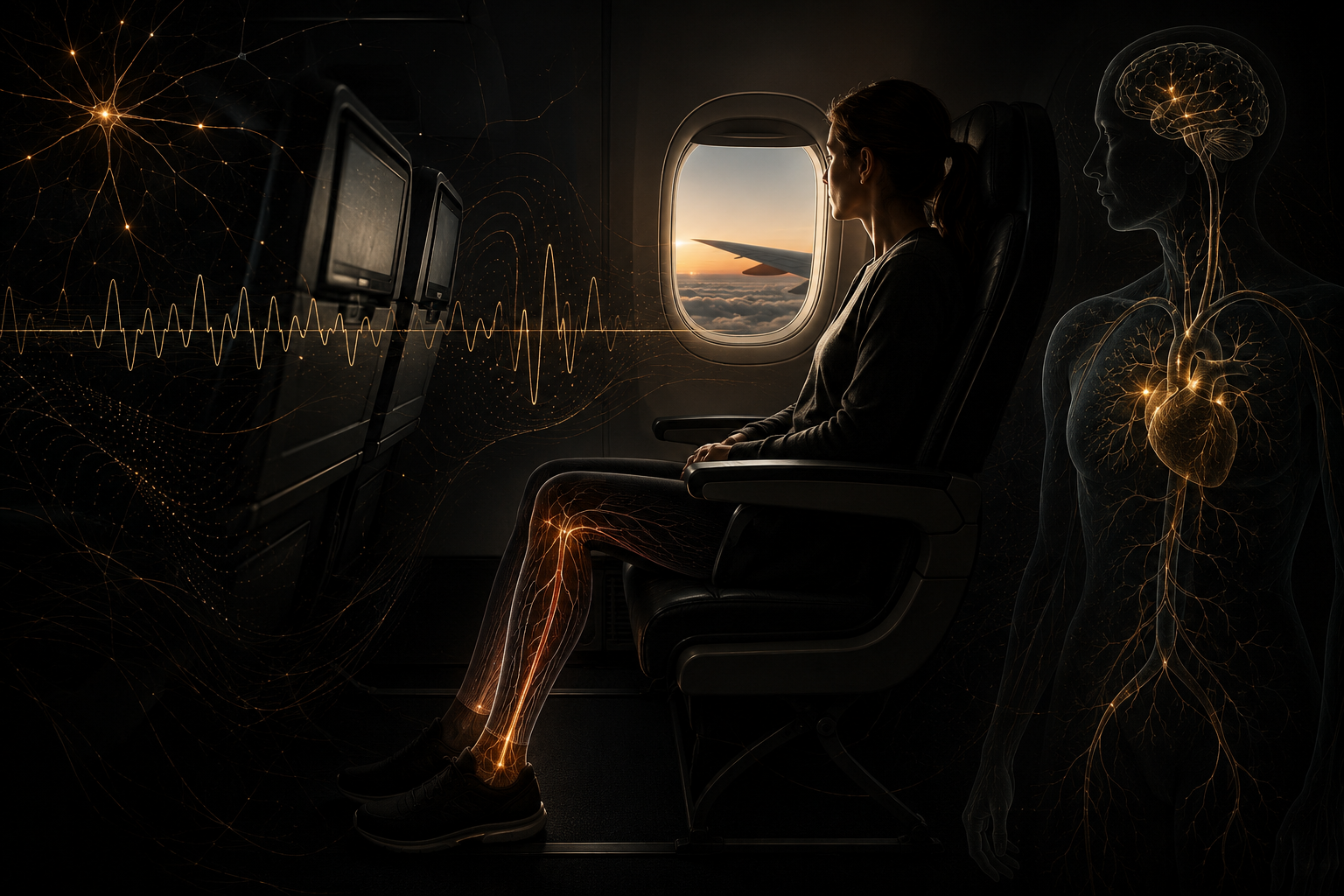
Traveling with POTS and Dysautonomia
Helping Patients Travel Smarter, Safer, and with Greater Confidence
Travel places unique demands on the autonomic nervous system. Many patients with dysautonomia or POTS report increased dizziness, tachycardia, fatigue, cognitive fog, nausea, temperature dysregulation, or symptom flares during and after travel, particularly air travel.
These symptoms reflect physiologic stressors associated with increased stress, flying, prolonged sitting, dehydration, sleep disruption, heat exposure, oxygenation, and changes in altitude. Individuals struggling with autonomic regulation can temporarily push the body beyond its normal physiologic reserve during travel.
At NeuroSport, we commonly help patients prepare for travel while minimizing unnecessary symptom escalation and post-travel crashes.
Why Flying Can Trigger Symptoms
Cabin Pressure and Relative Hypoxia
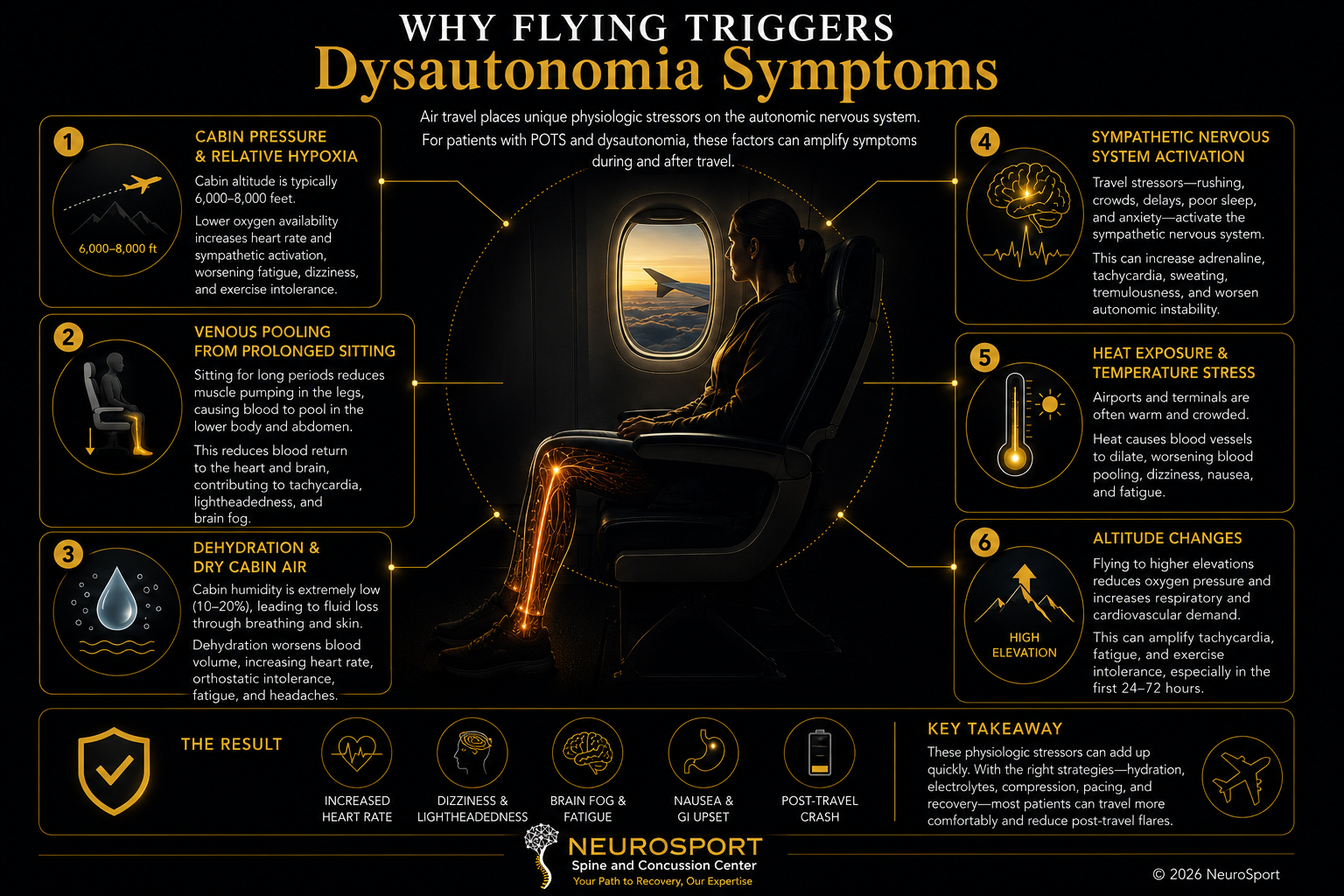
Commercial aircraft are pressurized, but not to sea level. Most cabins simulate elevations of approximately 6,000–8,000 feet. At these altitudes, oxygen availability is mildly reduced. For healthy individuals, this change is usually well tolerated. For patients with dysautonomia, the additional physiologic demand may increase:
heart rate
sympathetic nervous system activation
fatigue
dizziness
exercise intolerance
Some patients notice symptoms beginning during the flight, while others experience worsening later that day or the following day.
Venous Pooling During Long Flights
Prolonged sitting reduces lower extremity muscle activity and venous return to the heart. In POTS and autonomic dysfunction, blood vessels may already struggle to constrict effectively. This can allow blood to pool in the legs and abdomen, reducing blood return to the heart and brain.
Potential consequences include:
lightheadedness
tachycardia
brain fog
fatigue
presyncope
This is one reason compression garments and periodic movement are often helpful during travel.
Dehydration and Dry Cabin Air
Cabin air is extremely dry and may contribute to fluid loss during travel. Many patients become significantly more volume depleted during flights. For patients with hypovolemic or neuropathic POTS, this can worsen orthostatic intolerance and autonomic symptoms. Combined with:
inadequate fluid intake
caffeine
alcohol
travel stress
increased respiratory water loss
Sympathetic Nervous System Activation
Travel days are often physically and mentally demanding. These demands can increase sympathetic nervous system activation and physiologic stress.
Factors such as:
altered sleep schedules
elevated pretravel stress and anxiety
rushing through airports
prolonged standing
heat exposure
schedule changes
sensory overload
anxiety
lifting luggage
Patients with hyperadrenergic features may experience:
increased tachycardia
sweating
tremulousness
adrenaline surges
difficulty sleeping
worsening fatigue after arrival
Why Higher Elevations Can Feel More Difficult
Some patients notice a significant increase in symptoms when traveling from lower elevations to mountain or high-altitude environments.
Higher elevations place additional demands on the cardiovascular and autonomic nervous systems.
At altitude:
oxygen saturation in the air is decreased
heart rate often increases
respiratory demand rises
sympathetic nervous system activity increases
dehydration risk increases
For patients already struggling with autonomic regulation, these additional stressors may amplify symptoms. Common patient reports include:
“I felt much worse in Denver.”
“My heart rate stayed elevated.”
“I crashed after arriving in the mountains.”
“I could not tolerate hiking like I used to.”
The first 24–72 hours after arrival are often the most challenging as the body attempts to adapt. Patients traveling to higher elevations may benefit from:
increased hydration and electrolyte intake
pacing physical activity
avoiding overexertion the first several days
prioritizing sleep and recovery
maintaining compression strategies consistently
Preparing Before Your Trip
Preparation should begin 48 hours before travel.
Hydration and Electrolytes
Increase electrolyte supported fluid intake before travel - prioritize electrolyte-rich hydration strategies. Many patients benefit from structured electrolyte intake rather than water alone.
Compression Garments
Medical-grade waist-high or upper thigh-high compression garments may help reduce venous pooling during prolonged sitting and standing. The greater your symptoms the higher your compression garments should be.
Sleep and Recovery
Poor sleep significantly increases autonomic symptom burden. Avoid beginning major trips already sleep deprived.
Medication Planning
Carry medications in your carry-on bag and avoid placing essential medications in checked luggage. Consider getting a medic alert bracelet.
Sodium Support
For most patients we instruct them to increase sodium intake as part of their treatment plan, modest sodium loading prior to travel may help support overall blood volume.
Know the summer travel tips for POTS and dysautonomia
Airport and In-Flight Strategies
For many patients, the airport itself may be more physiologically stressful than the flight.
Long security lines, rushing between gates, prolonged standing, heat exposure, luggage handling, and schedule disruption can all increase symptom burden. Helpful strategies may include:
selecting an aisle seat when possible
performing ankle pumps and calf contractions during the flight
standing or walking periodically
wearing light layers to reduce overheating
maintaining electrolyte intake throughout travel
avoiding alcohol during flights
minimizing excessive caffeine intake
Some patients with more severe orthostatic intolerance should request airport wheelchair assistance, especially in larger airports. Traveling with a friend may be a good idea. Consider using the early boarding accommodations to decrease the hurry and give yourself some time to settle in.
Travel with dysautonomia requires more planning, pacing, hydration, and physiologic support.
The goal is not to avoid travel altogether. The goal is to reduce avoidable autonomic stress before, during, and after the trip. With the right strategy, many patients with POTS and dysautonomia can travel successfully while lowering the risk of symptom flares, post-travel crashes, and unnecessary setbacks.
The After Travel POTS Crash
One of the most misunderstood aspects of dysautonomia is delayed symptom escalation. Some patients feel relatively stable during travel but experience a significant symptom flare 24–72 hours later.
This may reflect:
cumulative autonomic stress
dehydration
reduced recovery capacity
poor sleep
prolonged upright exposure
overexertion during travel
Patients often attempt to “push through” travel days, vacations, conferences, or family events, only to experience substantial autonomic fatigue afterward. At NeuroSport, we frequently encourage patients to:
schedule recovery time after arriving from travel
avoid overloading the first several days
maintain hydration aggressively
pace activities realistically
avoid the “all-or-nothing” cycle that often worsens autonomic crashes
Melatonin is a circadian timing hormone rather than simply a sedative. Read more about melatonin and other sleep supplements.
When Patients Should Be More Cautious About Flying
Some patients may require additional planning and medical guidance before air travel, particularly if they are experiencing:
uncontrolled syncope
severe orthostatic intolerance
unstable cardiovascular symptoms
significant dehydration
recent illness
severe exercise intolerance
inability to tolerate upright activity
psychogenic nonepileptic seizures (PNES) and dysautonomia
This does not necessarily mean patients cannot travel. It means travel planning should be individualized and approached thoughtfully. Generally, people in a dysautonomia flare should avoid air travel until they are more stable. The benefits verses the risk should be assessed. Consider adding travel insurance if you are not stable with your condition.
Planning Travel with POTS or Dysautonomia?
Travel can place significant demands on the autonomic nervous system, particularly during flights, altitude changes, prolonged standing, heat exposure, and physically demanding travel days. At NeuroSport, we help patients better understand their autonomic patterns and develop practical strategies designed to reduce symptom escalation before, during, and after travel.
Our evaluations may include orthostatic testing, autonomic assessment, exercise tolerance evaluation, pacing strategies, hydration planning, and individualized recommendations based on your specific clinical presentation.
Whether you are preparing for a vacation, work travel, athletic event, college transition, or family trip, thoughtful planning can often make travel safer, more manageable, and far less physically disruptive.