

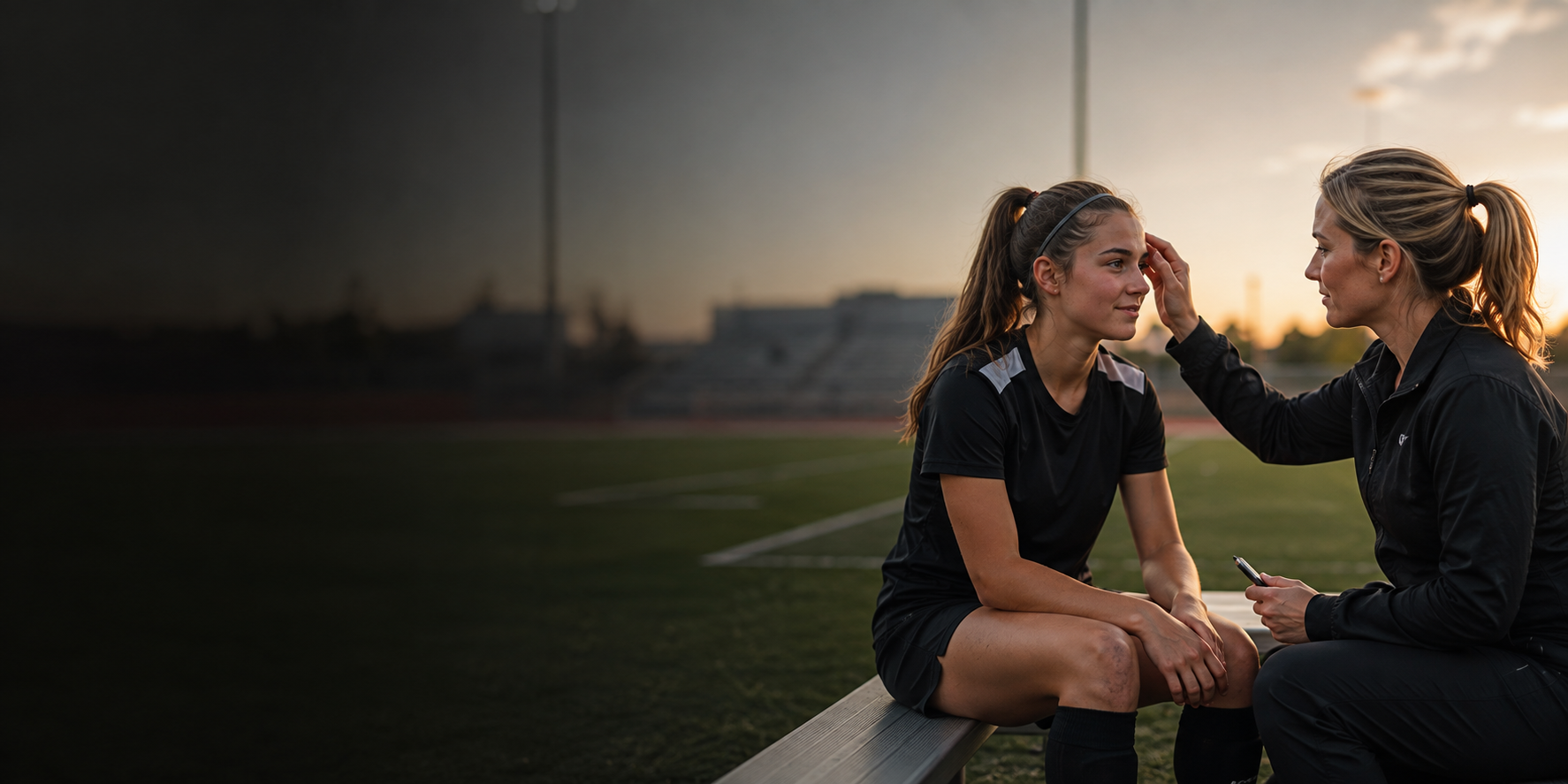
HIGH SCHOOL ATHLETE CONCUSSION CARE
A Concussion Affects More Than the Game
High school athletes must recover for the classroom as well as the playing field. NeuroSport provides comprehensive concussion evaluation, individualized recovery planning, and coordinated guidance for returning safely to school, exercise, practice, and competition.
Care is led by Dr. William Moreau, former Director of Clinics and Vice President of Sports Medicine for the United States Olympic Committee and Chief Medical Officer for Team USA. His national and international concussion leadership is brought directly to the care of each student-athlete.
NeuroSport serves student-athletes and families throughout Vancouver, Washington, Portland, Oregon, and the surrounding region.
Concussion Evaluation Is More Than a Symptom Checklist
A Concussion Is More Than a Symptom Checklist
Headache, dizziness, light sensitivity, difficulty concentrating, and fatigue are important—but symptoms alone do not reveal which systems have been affected or what is delaying recovery. No single computerized test can provide the complete answer.
NeuroSport evaluates the student-athlete across the areas that matter for learning, daily function, exercise tolerance, and safe return to sport.
Neurological Function
Cranial nerve function, sensation, strength, coordination, reaction, memory, concentration, and other neurological findings are evaluated for evidence of impairment.
Vision and Eye Movement
Eye tracking, convergence, saccades, visual stability, and sensitivity to visual motion are assessed because subtle deficits can interfere with reading, classroom performance, balance, and sport.
Balance and Vestibular Function
Static and dynamic balance, gait, spatial orientation, and vestibular function are examined to identify problems that may not be apparent while the athlete is sitting still.
Cervical Spine Function
The neck is evaluated for joint, muscular, and neurological injuries that can contribute to headache, dizziness, restricted movement, and persistent symptoms.
Exercise and Autonomic Response
Heart-rate regulation, exercise tolerance, positional symptoms, and autonomic function are assessed when indicated. These findings help determine whether the athlete is ready to begin or advance physical activity.
Cognitive and Emotional Health
Attention, memory, processing speed, sleep, mood, and emotional health are considered as part of the overall clinical picture—not treated as disconnected complaints.
The findings are then used to establish clinical priorities and create an individualized plan for returning to school, exercise, practice, and competition.
The First Decisions Matter
What Parents Should Know After a Suspected Concussion
A high school athlete with a suspected concussion should be removed from play immediately and should not return to practice or competition that day. Continuing to play after a concussion increases the risk of further more serious injury and may complicate recovery.
Concussion symptoms are not always obvious at the time of injury. Headache, dizziness, visual difficulty, confusion, memory problems, light sensitivity, fatigue, or emotional changes may develop or become more noticeable over the following hours—especially when the athlete attempts schoolwork, screen use, physical activity, or other demanding tasks.
What Parents Should Do
Remove the athlete from play and prevent further head-impact exposure.
Arrange a timely clinical evaluation.
Monitor for new or worsening symptoms.
Allow relative physical and cognitive rest during the first 24–48 hours.
Avoid prolonged isolation, complete inactivity, or extended confinement in a dark room.
Gradually resume normal daily activity within symptom tolerance.
Coordinate temporary academic support when symptoms interfere with school.
Do not begin an unrestricted return-to-sport progression until the athlete has been evaluated and is ready to advance.
Most student-athletes can begin returning to school before they are completely symptom-free. Returning to the classroom and returning to contact sport are separate processes. Each requires its own progression, monitoring, and clinical decision-making.
Seek Emergency Care Immediately If the Athlete Develops:
A worsening or severe headache
Repeated vomiting
Increasing confusion, agitation, or unusual behavior
A seizure or convulsions
Slurred speech
Weakness, numbness, or loss of coordination
Unequal pupils or new vision loss
Increasing drowsiness or difficulty awakening
Loss of consciousness or clinical deterioration
Significant neck pain or concern for cervical spine injury
When emergency warning signs are absent, NeuroSport can provide the comprehensive evaluation needed to identify affected systems, establish clinical priorities, and guide the student-athlete’s recovery.
RECOVERY PLANNING
Recovery Has Two Tracks
Returning to School and Returning to Sport Require Separate Plans
A student-athlete may tolerate light exercise but struggle with reading, screens, crowded hallways, noise, or sustained concentration. Another athlete may function well in class but develop symptoms when heart rate, visual demand, balance, or sport intensity increases.
NeuroSport evaluates both sides of recovery and develops a plan based on the athlete’s clinical findings, symptom response, academic demands, sport, position, and stage of recovery.
One Coordinated Recovery Plan
Academic support should be individualized and progressively reduced as the athlete improves. The objective is a successful return to full learning—not prolonged removal from school.
NeuroSport works with the athlete, parents, school personnel, certified athletic trainer, coaches, and other healthcare professionals when appropriate. Clear communication helps prevent conflicting instructions, premature progression, and unnecessary delays.
Return to Learn
The goal is to help the athlete remain engaged in school without repeatedly overwhelming the recovering nervous system. When indicated, temporary academic adjustments may include:
Shortened school days or modified attendance
Rest breaks during the school day
Reduced homework or extended completion time
Temporary postponement of tests and major assignments
Reduced screen exposure
Printed notes or audio-based learning
Adjustments for light, noise, and crowded environment
Return to Sport
Return to sport is a graduated process rather than a single clearance decision. The athlete progresses through increasingly demanding stages while symptoms, neurological function, balance, vision, exercise response, and recovery are monitored. The progression typically includes:
Light aerobic exercise
Moderate aerobic activity
Higher-intensity exercise and strength training
Sport-specific, non-contact activity
Full-contact practice following medical clearance
Return to competition
WHEN RECOVERY STALLS
Failure to Improve Is a Clinical Finding
Within a few days a concussed Athlete Should Be Recovering—or Clearly Trending Toward Recovery
Recovery times vary, particularly among adolescents. However, waiting indefinitely for symptoms to disappear is not a treatment plan. When a student-athlete is not showing meaningful improvement during the first one to two weeks, or worsens when attempting school or exercise, additional evaluation is warranted.
Persistent symptoms do not necessarily mean that the brain has failed to heal. They may indicate that specific neurological, visual, vestibular, cervical, autonomic, cognitive, sleep, or emotional factors continue to interfere with recovery.
Common Factors That Can Delay Recovery
Not using low level exercise as a treatment for the concusison
Visual tracking or eye-coordination dysfunction
Vestibular impairment and motion sensitivity
Cervical spine injury and cervicogenic headache
Exercise intolerance
Autonomic nervous system dysfunction
Postural tachycardia or orthostatic intolerance
Migraine or post-traumatic headache patterns
Sleep disruption
Cognitive overload
Anxiety, depression, or emotional stress
Inadequately structured return-to-school or return-to-sport demands
Concussion and Autonomic Dysfunction
A concussion can disrupt communication between the brain, heart, and blood vessels. Some athletes subsequently develop abnormal heart-rate regulation, dizziness when standing, exercise intolerance, temperature sensitivity, unusual fatigue, or symptoms resembling postural orthostatic tachycardia syndrome—POTS.
These athletes may appear physically recovered while remaining unable to tolerate school, exercise, or normal daily activity. Autonomic and exercise-response testing can help identify this pattern and guide a more precise rehabilitation plan.
Find the Barrier to Recovery — Then Treat that Barrier
NeuroSport’s approach is to identify what is preventing recovery rather than repeatedly telling the athlete to rest and wait. Treatment is directed by the clinical findings and may include graded exercise, vestibular rehabilitation, visual or oculomotor training, cervical care, balance retraining, autonomic rehabilitation, academic planning, and coordination with other specialists.
THE NEUROSPORT CARE PATHWAY
From the Initial Evaluation to a Safe Return
Every Step Is Guided by the Athlete’s Clinical Findings
Concussion recovery is not a checklist completed on a predetermined schedule. NeuroSport uses repeated clinical assessment, controlled progression, and communication with the athlete’s support team to guide each stage of recovery.
01 — Comprehensive Evaluation
The first visit establishes the nature and extent of the injury. The evaluation includes a detailed history, symptom assessment, neurological examination, vision and eye-movement testing, balance and vestibular assessment, cervical spine evaluation, and cognitive screening. Exercise and autonomic testing are added when clinically indicated.
02 — Findings and Recovery Plan
The results are explained to the athlete and parents in clear language. Clinical priorities are identified, and an individualized plan is developed for school participation, daily activity, exercise, rehabilitation, and sport progression.
03 — Active Recovery and Rehabilitation
Recovery is monitored as the athlete gradually resumes cognitive and physical activity. When deficits are identified, care may include graded aerobic exercise, balance training, vestibular rehabilitation, visual or oculomotor exercises, cervical treatment, autonomic rehabilitation, and sport-specific progression.
NeuroSport can also coordinate recommendations with school personnel, athletic trainers, coaches, and other healthcare professionals.
04 — Reassessment and Return-to-Play Clearance
The athlete is reassessed as activity demands increase. Clearance is not based solely on the athlete reporting that symptoms have resolved or on the result of one computerized test.
Before unrestricted competition, the athlete should demonstrate clinical recovery, tolerate full academic participation, complete the graduated return-to-sport progression, and successfully participate in full practice without meaningful symptom recurrence.
The Goal Is More Than Returning Quickly
The goal is to return the student-athlete safely, confidently, and with the physical and neurological capacity required for both school and sport.
EXPERIENCE AND LEADERSHIP
Experience Built at the Highest Level—Applied to Every Athlete
High School Athletes Deserve the Same Clinical Rigor as Elite Competitors
NeuroSport’s concussion program is led by Dr. William Moreau, a chiropractic sports medicine specialist with more than four decades of clinical experience caring for athletes and individuals with complex neurological and musculoskeletal conditions.
Dr. Moreau served for ten years as Director of Clinics for the United States Olympic Committee and later as Vice President of Sports Medicine. He was Chief Medical Officer for Team USA at the Rio 2016 Olympic Games and the PyeongChang 2018 Olympic Winter Games, and served in medical leadership roles at the London 2012 and Sochi 2014 Olympic Games.
His concussion leadership includes participation in the 2016 International Consensus Conference on Concussion in Sport in Berlin and the NFL International Think Tank on Concussion Research.
That experience now supports the care delivered at NeuroSport. The same principles used in high-performance sport—comprehensive evaluation, objective clinical findings, progressive rehabilitation, coordinated decision-making, and safe return to competition—are applied to every high school athlete.
The level of competition may differ. The responsibility to protect the athlete does not.
High School Concussion Questions
How soon should an athlete be evaluated after a suspected concussion?
Once emergency warning signs and more serious injuries have been addressed, a timely concussion evaluation is appropriate. The athlete should be removed from play immediately and should not return to practice or competition on the day of the injury.
Does a concussion require loss of consciousness?
No. Most concussions (90%) do not involve loss of consciousness. An athlete may remain awake and appear relatively normal while still experiencing a concussion.
Does the athlete need a CT scan or MRI?
Concussion is primarily a clinical diagnosis, and routine brain imaging is most often normal. CT or MRI may be indicated when the history, examination, or worsening symptoms raise concern for bleeding, fracture, structural injury, or another condition requiring further investigation.
Can my athlete attend school while still experiencing symptoms?
Yes. Most student-athletes can begin returning to school before every symptom has resolved. Temporary academic adjustments may be needed to manage difficulties with concentration, reading, screens, light, noise, fatigue, or headaches. Return to school should be progressive and based on the athlete’s tolerance.
Is computerized neurocognitive testing enough to diagnose or clear a concussion?
No. Computerized testing may provide useful supplemental information, particularly when a valid baseline is available, but it should not be used as a stand-alone diagnostic or return-to-play tool. Clearance requires a multidomain clinical assessment.
How long does concussion recovery take in a high school athlete?
Recovery varies. Many adolescents improve steadily over the first several weeks, but the direction of recovery matters as much as the calendar. An athlete who is not clearly improving, cannot tolerate school or exercise, or develops new symptoms should be reassessed rather than simply told to continue waiting.
When can my athlete return to competition?
Return to competition occurs only after the athlete has regained clinical function, resumed full academic participation, completed a graduated return-to-sport progression, tolerated full practice, and received appropriate medical clearance. Feeling better at rest is not enough.
What if dizziness, rapid heart rate, or exercise intolerance persists?
Concussion can disrupt autonomic regulation and produce dizziness with standing, abnormal heart-rate responses, fatigue, temperature sensitivity, or difficulty tolerating exercise. When these symptoms are present, NeuroSport can evaluate autonomic and exercise responses and incorporate the findings into the rehabilitation plan.
Your Athlete’s Recovery Should Be Guided by Findings—Not Guesswork
Whether the concussion occurred yesterday or recovery has stalled for several weeks, a comprehensive evaluation can clarify what has been affected and what should happen next.
NeuroSport provides specialized concussion care for high school athletes, with individualized guidance for returning safely to school, exercise, practice, and competition.
Serving student-athletes and families throughout Vancouver, Washington, Portland, Oregon, and the surrounding region.
NEUROSPORT KNOWLEDGE CENTER
Comprehensive Concussion Evaluation at NeuroSport
A concussion can affect neurological, cognitive, visual, vestibular, balance, cervical, and autonomic function. Learn how NeuroSport evaluates these systems to identify clinical priorities and guide recovery.
Building a Recovery Plan From the Clinical Findings
Evaluation findings are translated into clinical priorities, targeted rehabilitation, and progressive return-to-school and return-to-sport plans. See how each stage is sequenced and reassessed as the athlete improves.
Why Autonomic Nervous System Testing Matters
Concussion can disrupt heart-rate regulation, positional tolerance, cerebral blood flow, and exercise capacity. Learn how autonomic testing can identify dysfunction that may be missed during a routine concussion examination.
TAKE THE NEXT STEP:
Get Clear Answers About Your Athlete’s Recovery
Whether the concussion occurred recently or recovery is no longer progressing as expected, a comprehensive evaluation can identify what has been affected and clarify what should happen next.
NeuroSport provides specialized concussion care for high school athletes throughout Vancouver, Washington, Portland, Oregon, and the surrounding region.
Recommended links:
Returning to School After a Concussion → CDC HEADS UP
Six-Step Return-to-Sport Progression → CDC HEADS UP
Concussion Danger Signs → CDC HEADS UP