

Comprehensive Concussion Evaluation at NeuroSport
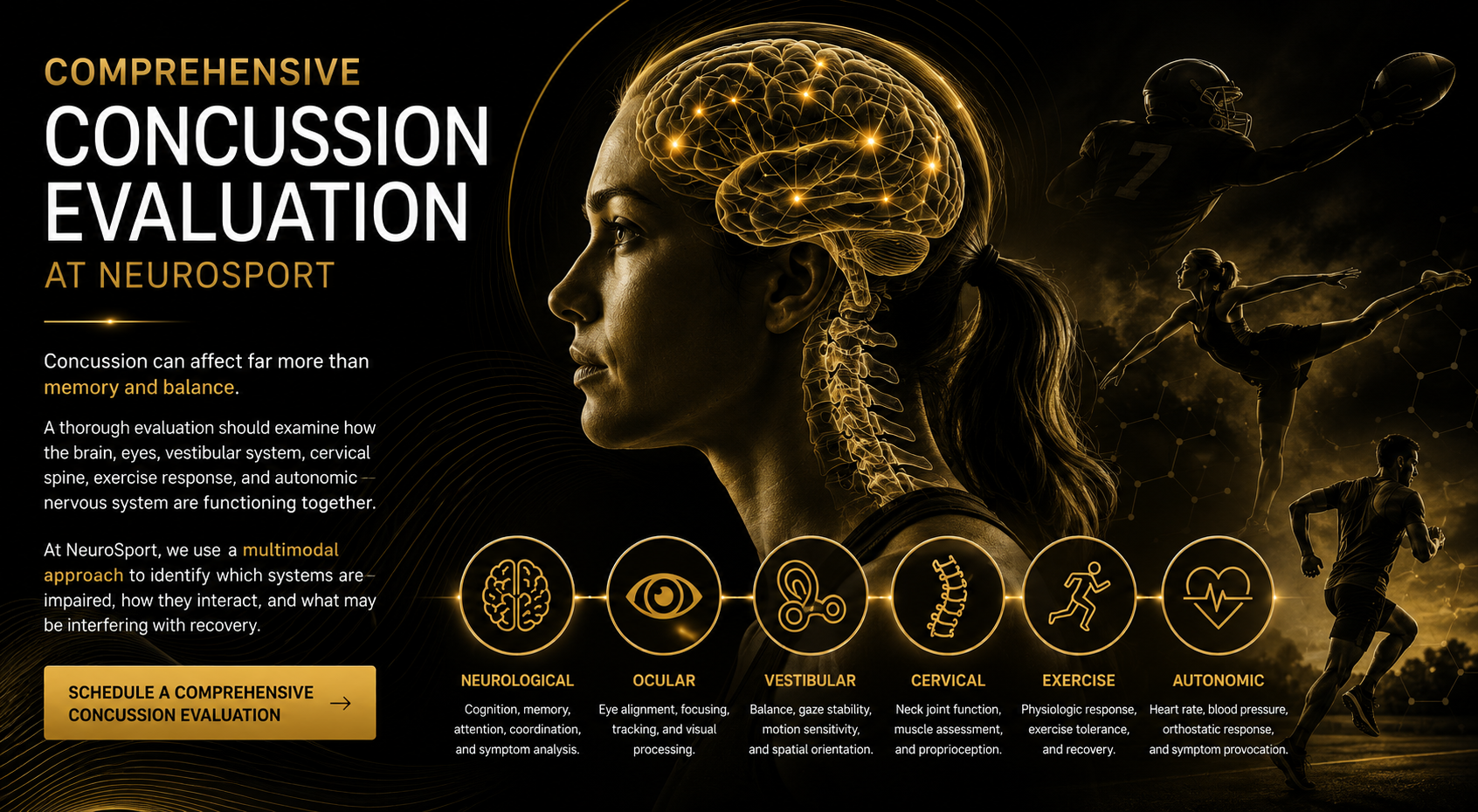
Concussion can affect far more than memory and balance.
A thorough evaluation should examine how the brain, eyes, vestibular system, cervical spine, exercise response, and autonomic nervous system are functioning together.
At NeuroSport, we use a multimodal approach to identify which systems are impaired, how they interact, and what may be interfering with recovery.
Neurological + Ocular + Vestibular + Cervical + Exercise + Autonomic Assessment
Why a Multimodal Concussion Evaluation Matters
Concussion can affect multiple systems at the same time.
A patient may present with headache, dizziness, blurred vision, neck pain, cognitive fatigue, exercise intolerance, or orthostatic symptoms. These complaints can look similar on the surface, but they may arise from very different underlying dysfunction.
A symptom checklist can tell us what the patient feels. A comprehensive examination is needed to help determine why those symptoms are occurring.
At NeuroSport, concussion evaluation looks beyond a single test or symptom score. We assess the major systems that commonly contribute to persistent symptoms:
Neurological + Ocular + Vestibular + Cervical + Exercise + Autonomic
Each system provides different information about recovery. The neurological examination evaluates brain function, cognition, coordination, and symptom response. The ocular examination assesses how the eyes focus, track, align, and work together. The vestibular examination evaluates balance, motion sensitivity, gaze stability, and spatial orientation. The cervical examination identifies neck-related contributors to headache, dizziness, and altered head-position awareness. Exercise testing evaluates physiologic tolerance, symptom thresholds, heart-rate response, and recovery with exertion.
Autonomic assessment examines how the nervous system regulates heart rate, blood pressure, circulation, upright posture, and other physiologic demands.
These systems do not function independently. Dysfunction in one area can amplify problems in another.
The purpose of a multimodal evaluation is to identify the patient’s specific pattern of dysfunction so treatment can be directed toward the systems that are actually limiting recovery.
Neurological Assessment
The neurological examination provides the foundation for understanding how concussion has affected brain function.
Depending on the patient’s age, symptoms, stage of recovery, and clinical history, assessment may include:
Orientation and mental status
Attention and concentration
Memory
Processing speed
Cranial nerve function
Coordination
Reaction to cognitive demand
Balance and postural control
Symptom burden and symptom provocation
These findings are important, but they should not be interpreted in isolation.
A patient may appear cognitively slowed because of headache, poor sleep, visual dysfunction, vestibular symptoms, autonomic instability, or exercise intolerance. Likewise, balance problems may reflect vestibular dysfunction, cervical input, visual impairment, or a combination of several systems.
The neurological examination helps establish how the brain is functioning, while the broader multimodal evaluation helps determine what is driving the abnormal findings.
That distinction matters because treatment should be directed at the impaired systems rather than at symptoms alone.
Ocular and Visual Assessment
Vision problems after concussion are common and may persist even when visual acuity is normal and the eyes are structurally healthy.
The problem may involve how the brain controls and integrates visual function. Depending on the patient’s symptoms and examination findings, ocular assessment may include:
Near point of convergence
Accommodation and focusing ability
Saccadic eye movements
Smooth pursuits
Eye alignment
Gaze stability
Visual motion sensitivity
Eye-head coordination
Symptom response to reading and screen use
Abnormalities in these areas may contribute to:
Blurred vision
Double vision
Eye strain
Headache
Difficulty reading
Reduced screen tolerance
Dizziness
Motion sensitivity
Visual fatigue
Visual dysfunction can also affect balance, cognitive endurance, and tolerance for physical activity.
This is why NeuroSport does not treat vision as an isolated eye problem. Ocular findings are interpreted together with vestibular, cervical, neurological, exercise, and autonomic findings to determine how visual dysfunction is contributing to the overall concussion presentation.
Vestibular Assessment
The vestibular system helps the brain interpret movement, maintain balance, and understand where the body is in space.
After concussion, vestibular dysfunction may contribute to dizziness, imbalance, nausea, motion sensitivity, difficulty stabilizing vision, and symptoms triggered by head movement or visually busy environments.
Depending on the patient’s presentation, vestibular assessment may include:
Gaze stability
Vestibular-ocular reflex function
Balance and postural control
Head movement tolerance
Visual motion sensitivity
Eye-head coordination
Symptom response to movement
Dynamic balance tasks
Vestibular findings are especially important because dizziness after concussion can have more than one cause. A patient may have symptoms related to the vestibular system itself, visual dysfunction, cervical dysfunction, autonomic instability, or a combination of these factors.
The purpose of vestibular assessment is to determine how movement, balance, and visual stabilization are functioning and how those findings fit into the broader concussion pattern.
Cervical Spine Assessment
he cervical spine is often injured at the same time as the concussion and can contribute to symptoms that closely resemble or amplify concussion-related problems.
The neck provides continuous sensory information to the brain about head position and movement. When that information is altered by joint dysfunction, muscle injury, pain, or impaired proprioception, the result may include headache, dizziness, visual disturbance, imbalance, or increased symptoms with movement.
Depending on the patient’s presentation, cervical assessment may include:
Range of motion
Joint function
Muscle tenderness and tone
Cervical proprioception
Headache reproduction
Symptoms with neck movement
Cervical contribution to dizziness
Coordination between the head, eyes, and body
Cervical findings are especially important because persistent headache or dizziness may not be caused by the brain alone.
A patient may have overlapping neurological, vestibular, ocular, and cervical contributors. Identifying the cervical component helps determine whether neck-specific treatment should be part of the recovery plan.
At NeuroSport, the cervical spine is evaluated as one part of the larger concussion picture rather than treated as an unrelated injury.
Exercise and Physiological Assessment
Exercise intolerance is a common feature of persistent concussion and can provide important information about how the nervous system is recovering.
Some patients feel relatively well at rest but develop headache, dizziness, nausea, fatigue, visual symptoms, or cognitive slowing as physical demand and heart rate increase.
Depending on the patient’s presentation, exercise assessment may include:
Resting heart rate and blood pressure
Symptom response to graded exertion
Heart-rate behavior during activity
Exercise tolerance and symptom threshold
Recovery after exertion
Ability to tolerate progressive cardiovascular demand
Symptom response during return-to-sport or return-to-activity progression
Exercise testing is not simply a measure of fitness.
It helps evaluate how the brain, cardiovascular system, and autonomic nervous system respond when physiologic demand increases.
This can be especially useful in patients who report that they function reasonably well while sitting or resting but become symptomatic during walking, climbing stairs, exercise, or sport.
Identifying an exercise threshold can also help guide rehabilitation. Activity can then be progressed at a level that challenges the system without repeatedly producing prolonged symptom exacerbation.
Autonomic Nervous System Assessment
The autonomic nervous system helps regulate heart rate, blood pressure, circulation, temperature control, digestion, pupil response, and the body’s adaptation to upright posture and exercise.
After concussion, autonomic regulation may be impaired even when the patient does not meet criteria for POTS.
That distinction is important.
Autonomic dysfunction is not the same as POTS. A patient may have orthostatic symptoms, abnormal heart-rate or blood-pressure responses, exercise intolerance, or other signs of impaired autonomic regulation without having POTS. In some patients, a more defined dysautonomia syndrome may develop over time.
Depending on the clinical presentation, autonomic assessment may include:
Resting heart rate and blood pressure
Supine-to-standing heart-rate response
Blood-pressure response to posture
Active Stand testing
NASA Lean testing when indicated
Orthostatic symptom response
Exercise heart-rate behavior
Recovery after exertion
Autonomic symptom inventories
Additional physiologic testing when clinically
appropriate
Autonomic assessment is especially relevant when patients report:
Dizziness or lightheadedness with standing
Exercise intolerance
Unexplained fatigue
Symptom worsening with upright activity
Palpitations or abnormal heart-rate response
Heat intolerance
Visual dimming or presyncope
Prolonged symptom provocation after exertion
The purpose is not to label every patient with dysautonomia.
The purpose is to determine whether autonomic dysfunction is contributing to the concussion presentation and whether it should influence rehabilitation, exercise progression, or further evaluation.
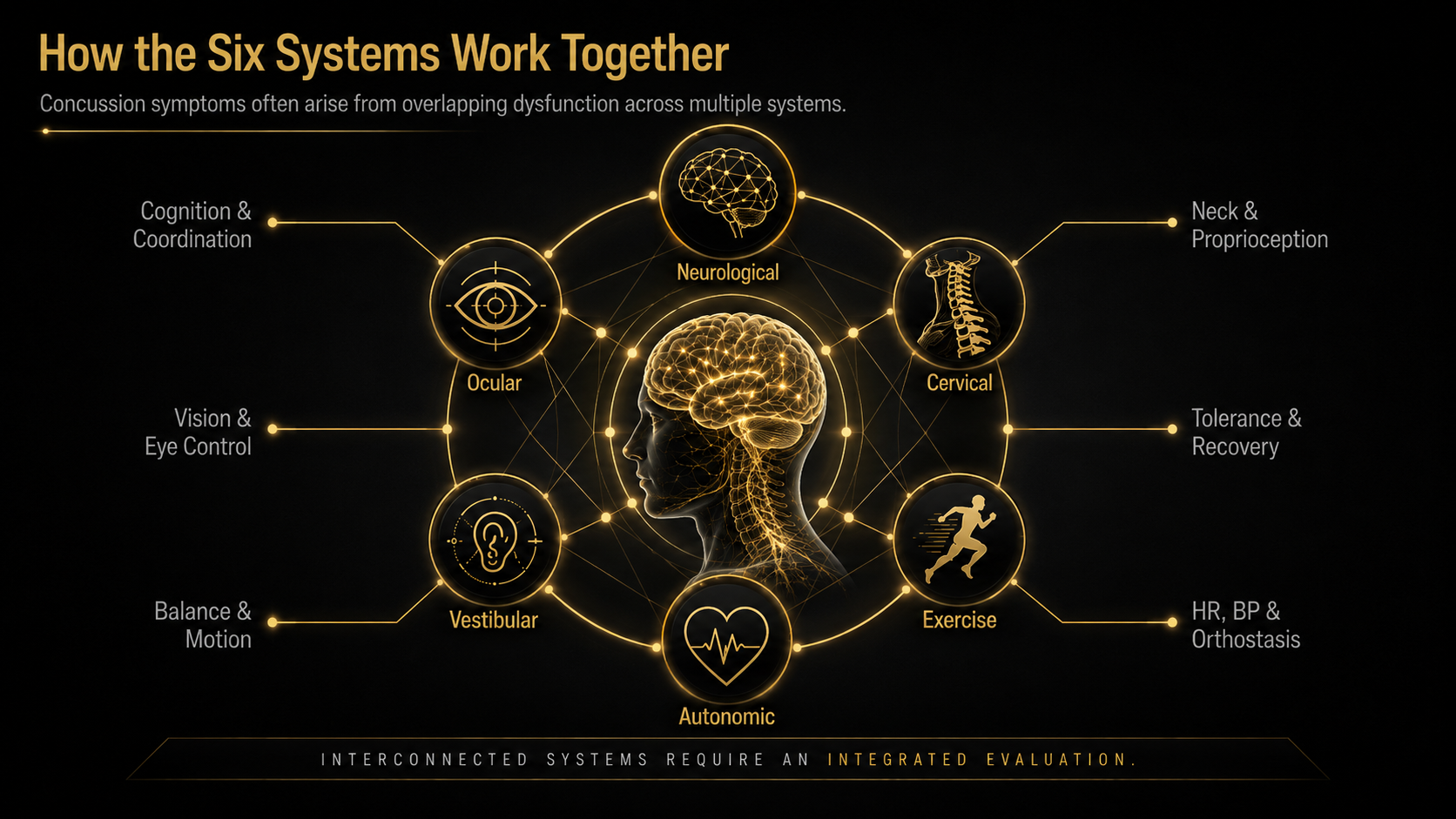
How the Six Systems Work Together
The six domains of concussion evaluation are closely interconnected.
A problem identified in one system may change the way another system functions or may increase the symptoms generated by that system.
For example:
Ocular dysfunction may increase dizziness, headache, and cognitive fatigue during reading or screen use.
Vestibular dysfunction may worsen visual motion sensitivity and balance.
Cervical dysfunction may contribute to headache, dizziness, and difficulty stabilizing vision.
Exercise intolerance may provoke neurological, visual, vestibular, or autonomic symptoms as physiologic demand increases.
Autonomic dysfunction may worsen symptoms with standing, heat, exertion, or prolonged activity.
Neurological dysfunction may reduce the brain’s ability to efficiently integrate visual, vestibular, cervical, and autonomic information.
This overlap helps explain why two patients with the same concussion diagnosis may have very different symptoms and very different recovery paths.
It also explains why treatment based only on the most obvious symptom may miss important contributors.
The goal of a comprehensive concussion evaluation is to identify the patient’s individual pattern across these systems and determine which findings are most relevant to recovery.
That information allows rehabilitation to be directed toward the specific impairments that are limiting function rather than relying on a one-size-fits-all concussion program.
Why Persistent Symptoms Require a Broader Examination
Persistent concussion symptoms are often multifactorial.
When recovery stalls, repeating the same symptom checklist may confirm that the patient is still symptomatic, but it may not explain why.
Younger patients take longer to recover
A broader examination can help identify whether persistent symptoms are being driven by:
Ocular dysfunction
Vestibular dysfunction
Cervical injury
Autonomic dysfunction
Cognitive impairment
Interaction among several of these systems
This distinction matters because similar symptoms can have different causes.
For example, dizziness may arise from vestibular dysfunction, cervical input, orthostatic intolerance, visual motion sensitivity, or more than one of these at the same time.
Headache may be influenced by cervical dysfunction, visual strain, migraine physiology, exertion, sleep disturbance, or autonomic instability.
Fatigue may reflect cognitive load, poor sleep, exercise intolerance, autonomic dysfunction, or the cumulative effort required to compensate for visual or vestibular impairment.
A comprehensive evaluation helps move the clinical question from:
“What symptoms are still present?”
to:
“What is producing or amplifying those symptoms?”
That shift is important because treatment becomes more specific when the underlying contributors are identified.
The NeuroSport Approach
At NeuroSport Spine & Concussion Center, concussion evaluation is individualized to the patient.
Not every patient requires every test. The examination is selected based on the patient’s age, symptoms, injury history, stage of recovery, activity demands, and findings during the initial assessment.
The goal is to build a clinically useful picture across the six major domains:
Neurological + Ocular + Vestibular + Cervical + Exercise + Autonomic
Findings from these areas are then considered together to determine:
Which systems are impaired
Which findings are most likely contributing to symptoms
Whether one system is amplifying dysfunction in another
Which areas should be prioritized in rehabilitation
Whether additional testing or specialty referral is appropriate
How activity, exercise, school, work, and sport should be progressed
Care may include:
Ocular-motor rehabilitation
Vestibular rehabilitation
Cervical spine treatment
Balance and coordination training
Autonomic rehabilitation
Graduated cardiovascular exercise
Cognitive and activity pacing
Return-to-learn planning
Return-to-work progression
Return-to-sport rehabilitation
Referral for specialty care when indicated
The purpose is not to create a larger list of abnormalities. The purpose is to identify the impairments that matter most and use those findings to build a more precise recovery plan.
The Future of Concussion Evaluation
Concussion care is moving beyond the idea that recovery can be judged by symptoms, memory testing, and balance alone.
A more complete examination considers how the injured nervous system responds to:
Visual demand
Head and body movement
Cognitive load
Exercise
Upright posture
Changes in heart rate and blood pressure
This is where autonomic assessment is becoming increasingly important.
Autonomic dysfunction may help explain persistent dizziness, fatigue, exercise intolerance, orthostatic symptoms, visual dimming, heat intolerance, and prolonged symptom provocation in some patients after concussion.
The goal is not to assume that every patient has dysautonomia or POTS.
The goal is to recognize when autonomic regulation may be part of the concussion physiology and evaluate it appropriately.
At NeuroSport, autonomic findings are interpreted alongside neurological, ocular, vestibular, cervical, and exercise findings rather than treated as a separate diagnosis in isolation.
This broader physiologic approach may provide a clearer explanation for why some patients recover quickly while others continue to struggle despite normal imaging or improvement in traditional concussion testing.
As concussion science continues to evolve, the direction is increasingly clear:
The future of concussion evaluation is not a single test. It is a more integrated understanding of how multiple neurological and physiological systems function together.
Schedule a Comprehensive Concussion Evaluation
Persistent concussion symptoms should not be treated as a single problem when multiple neurological and physiological systems may be involved.
At NeuroSport, concussion evaluation is designed to identify the specific systems contributing to symptoms and recovery limitations.
Our multimodal approach considers:
Neurological + Ocular + Vestibular + Cervical + Exercise + Autonomic
A comprehensive evaluation can help determine:
Which systems are impaired
Why certain symptoms continue
What is provoking or amplifying symptoms
Which areas should be prioritized in rehabilitation
How exercise and activity should be progressed
Whether specialty referral is appropriate
What may be limiting return to school, work, exercise, or sport
The goal is a more precise understanding of the patient’s concussion presentation and a treatment plan directed at the systems that actually need attention.