

Light Exposure to Improve Sleep, Circadian Rhythm, and Recovery
Why Light Timing Matters for Sleep and Performance
Light is one of the most powerful biological signals regulating sleep, alertness, and recovery. While many patients focus on supplements or medications, the timing, intensity, and consistency of light exposure often play a far more important role in how the body functions across the day.
When light exposure is properly aligned, it supports normal circadian rhythm, improves sleep onset, enhances daytime energy, and promotes more efficient recovery. When it is mistimed, even small disruptions can lead to fatigue, poor sleep quality, and difficulty maintaining consistent performance.
Understanding the Role of Light in the Body
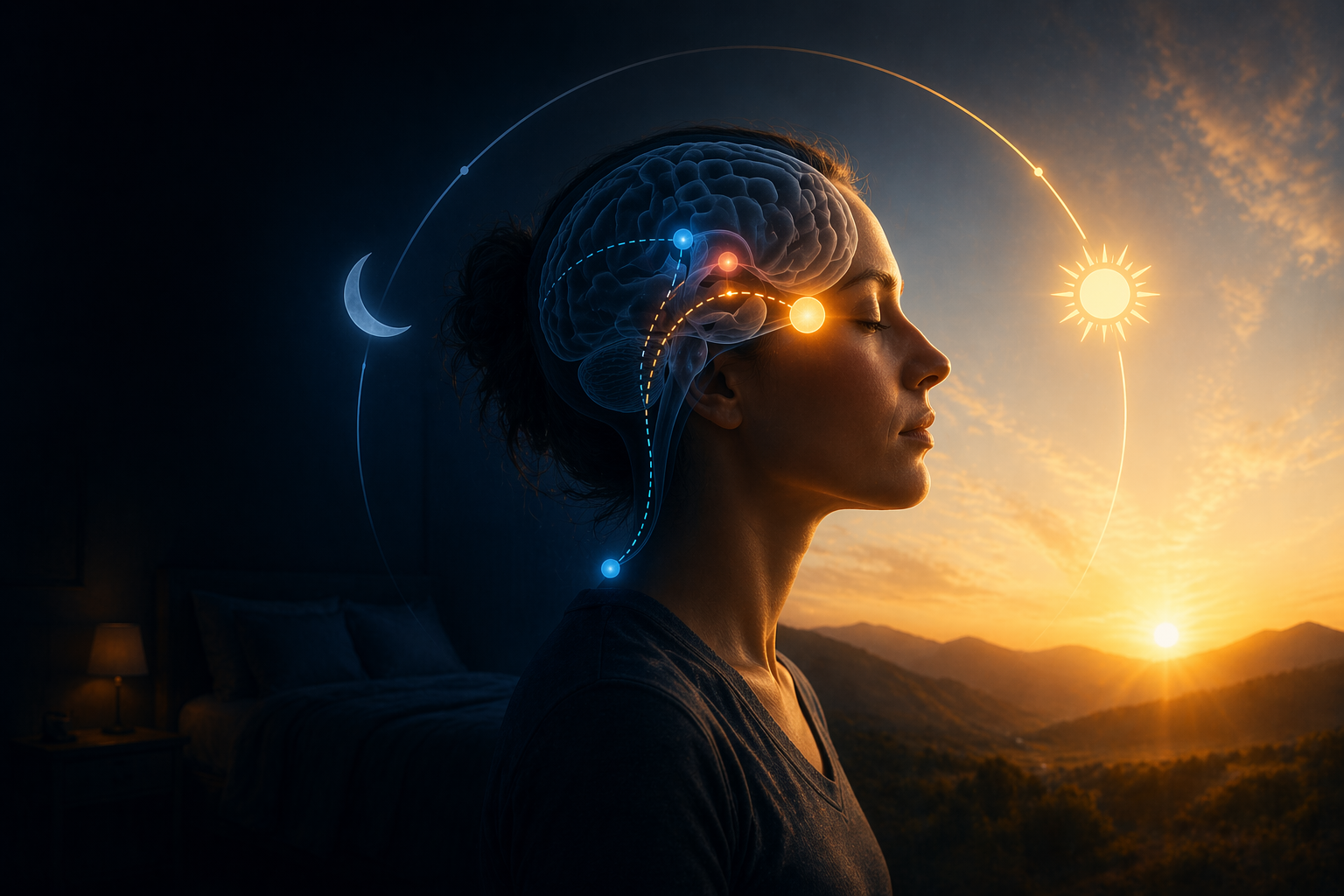
Light exposure directly influences the body’s internal timing system, known as the circadian rhythm. This system coordinates when you feel alert, when you feel tired, and when critical recovery processes occur.
Specialized cells in the eye detect light and send signals to the brain, which then regulates the timing of physiological functions across the body. One of the most important of these signals involves melatonin, a hormone that helps initiate sleep. Light exposure during the day supports normal timing of this process, while light exposure in the evening can delay it.
This is not simply a sleep issue. Circadian rhythm influences multiple systems, including cognitive function, cardiovascular regulation, and overall energy levels. When properly aligned, these systems work together efficiently. When disrupted, patients often experience fatigue, poor sleep quality, and inconsistent performance throughout the day.
At NeuroSport, this becomes particularly relevant in patients with dysautonomia and post-concussion symptoms. In these cases, the body’s ability to regulate physiological systems is already impaired. Mistimed light exposure can further disrupt this balance, making symptoms more persistent and more difficult to manage.
The Real Problem: Mistimed Light Exposure
The issue is not simply exposure to light itself. The problem is when that light exposure occurs.
The human body is designed to respond to strong light signals during the day and reduced light signals in the evening. When this pattern is disrupted, the circadian system loses its ability to regulate sleep and alertness effectively.
Several common patterns contribute to this disruption:
Insufficient light exposure during the day, particularly in indoor environments
Prolonged exposure to bright, full-spectrum, or overhead lighting in the evening
Late-night screen use in close proximity to the eyes
Inconsistent daily schedules that shift light exposure timing
These patterns weaken the body’s circadian signal during the day while delaying the natural transition toward sleep at night.
The result is a common and often frustrating presentation:
fatigue and reduced energy during the day, followed by increased alertness in the evening when the body should be preparing for sleep.
This pattern is frequently observed in patients with dysautonomia, post-concussion syndrome, and chronic fatigue conditions. In many cases, the issue is not a lack of effort toward improving sleep, but rather a mismatch between environmental light exposure and the body’s internal timing system.
Correcting this mismatch is a foundational step in restoring normal sleep patterns and improving overall physiological function.
Common Clinical Patterns
When light exposure is misaligned with the body’s internal timing system, patients often present with consistent and recognizable symptom patterns. These patterns are frequently attributed to “poor sleep” alone, but in many cases reflect underlying circadian disruption.
Common presentations include:
Difficulty falling asleep despite feeling physically tired
A “second wind” in the late evening hours
Difficulty waking in the morning, often with persistent fatigue
Fluctuating energy levels throughout the day
Reliance on caffeine or stimulation to maintain alertness
Poor recovery despite adequate time spent in bed
In many cases, patients report that they are doing the right things, attempting to maintain a consistent schedule, limiting late-night activity, and prioritizing sleep, yet continue to struggle.
This disconnect often reflects a mismatch between behavior and physiology. When the circadian rhythm is delayed or weakened, the body’s internal signals for sleep and wakefulness no longer align with the desired schedule.
These patterns are particularly common in:
Dysautonomia and POTS
Post-concussion syndrome
Chronic fatigue presentations
Individuals with irregular or indoor-dominant work environments
Recognizing these patterns is an important step. When identified early, they provide a clear opportunity to intervene by restoring appropriate light exposure timing and strengthening the body’s circadian signal.
Why Morning Light Actually Works
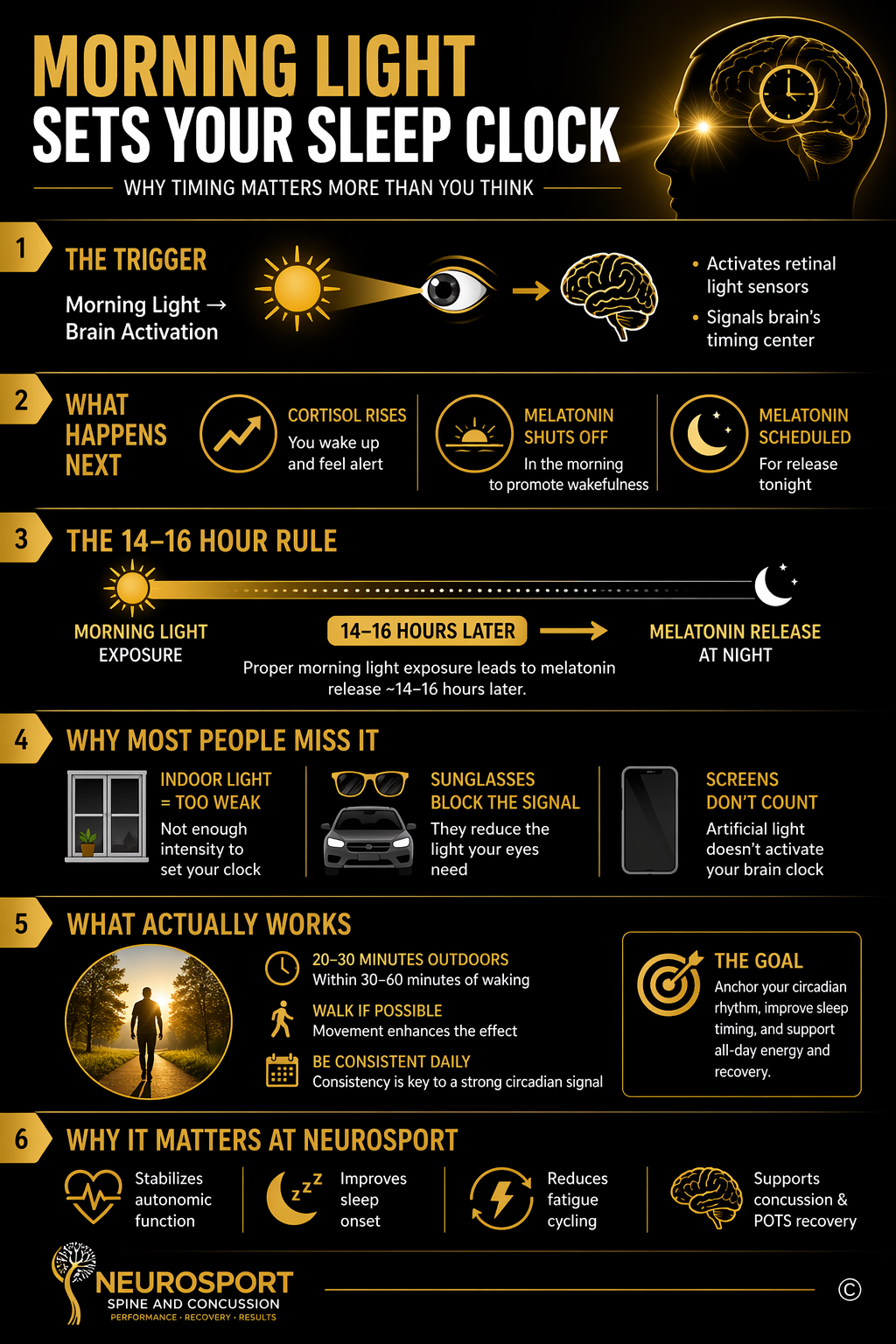
Morning light is not just “helpful.” It is the primary signal that sets your body’s internal clock. When light enters the eyes in the morning, it activates specialized retinal cells that communicate directly with the brain’s timing center. This triggers a coordinated physiological response:
A natural rise in cortisol to promote alertness
Suppression of melatonin in the morning
Precise timing of melatonin release later that night
This last point is the most important.
👉 Proper morning light exposure leads to melatonin release approximately 14–16 hours later, helping the body fall asleep at the right time.
Without this signal, the system drifts. Sleep becomes delayed, inconsistent, and less restorative. The Clinical Reality: Most People Get This Wrong. Many patients believe they are getting adequate morning light. In reality, they are not. Common patterns that fail to stimulate the circadian system include:
Sitting near a window indoors
Driving with sunglasses
Starting the day on a phone or computer in a dim environment
These do not provide enough light intensity to properly activate the
brain’s timing system. Effective light exposure requires:
Direct exposure to outdoor ambient light
Eyes open to the environment, without sunglasses
No need to look at the sun, simply being outside is sufficient
This is a simple intervention, but it must be done correctly to be effective.
What Actually Works: The NeuroSport Standard
To reliably anchor circadian rhythm:
Spend 20–30 minutes outdoors within 30–60 minutes of waking
Earlier is better when possible
Cloudy conditions are still effective
To enhance the effect:
Pair light exposure with movement, such as walking
Maintain consistent timing daily
When done correctly, patients often experience:
Improved sleep onset
More stable daytime energy
Improved heart rate variability patterns
Better overall autonomic stability
Why This Matters in Dysautonomia and Concussion Care
For patients with dysautonomia, POTS, or post-concussion symptoms, this is not optional. It is foundational. These conditions involve impaired regulation of the neurocardiac axis, which depends heavily on stable circadian signaling.
Consistent morning light exposure helps:
Reinforce normal autonomic timing patterns
Improve regulation of heart rate and blood pressure
Reduce sleep fragmentation and fatigue cycling
Stabilize daily energy and recovery patterns
When this step is missed, progress in other areas of care is often limited.
Put simply: If the circadian system is not anchored, the rest of the system struggles to stabilize.
The NeuroSport Light Exposure Framework
At NeuroSport, light exposure is approached as a structured physiologic intervention, not a general lifestyle recommendation. The goal is to restore a strong, consistent circadian signal by aligning light exposure with the body’s natural timing system.
This framework focuses on four key phases of the day:
Morning: Establish the Day
The first light exposure of the day is the most important.
Obtain natural outdoor light within 30 minutes of waking
Aim for 10–20 minutes, longer if conditions are overcast
Avoid remaining in dim indoor environments early in the day
Morning light helps anchor the circadian rhythm, improve alertness, and initiate the timing of the body’s sleep-wake cycle.
Daytime: Reinforce the Signal
Consistent light exposure throughout the day strengthens circadian stability.
Spend time outdoors when possible
Maintain a well-lit environment during working hours
Avoid prolonged periods in low-light indoor settings
Adequate daytime light exposure increases the strength of the circadian signal, which supports more effective sleep onset later in the evening.
Evening: Begin the Transition
Light exposure should gradually decrease as the day progresses.
Reduce overall light intensity 2–3 hours before bedtime
Use lamps instead of overhead lighting
Transition to warmer light sources with lower color temperature
Avoid bright, full-spectrum lighting in the evening
This phase allows the body to begin its natural transition toward sleep.
Night: Protect Sleep
Once the body is ready for sleep, the environment should support it.
Keep the bedroom dark
Minimize screen exposure before bed
If light is necessary, use dim, warm lighting
Protecting this phase is essential to allow normal sleep processes to occur without disruption.
Supplements and Sleep
Sleep supplements are widely used, but “natural” does not always mean effective, harmless, or appropriately dosed. This evidence-guided review examines magnesium glycinate, melatonin, L-tryptophan, and commonly used nutritinal supplement and herbal remedies.
Learn what the research supports, where evidence remains limited, and which safety concerns, medication interactions, and product-quality issues deserve attention.
Practical Implementations
Understanding light exposure is only useful if it can be applied consistently in daily life. The goal is not perfection, but creating a reliable pattern of light and darkness that the body can adapt to over time.
The following strategies provide a practical way to implement this approach:
Optimize Your Home Lighting
Use warmer light bulbs (2700K or lower) in living areas used during the evening
Avoid bright, cool, or full-spectrum overhead lighting at night
Prefer lamps and indirect lighting over ceiling fixtures in the evening hours
These changes reduce the intensity and spectral composition of light that can delay sleep onset.
Manage Screen Exposure
Enable night mode or blue light filters on devices
Reduce overall screen brightness in the evening
Avoid prolonged screen use in the hour before bed
Screens are often used close to the eyes and can significantly influence circadian timing, particularly late in the day.
Maintain Strong Daytime Light Exposure
Spend time outdoors daily, even in overcast conditions
Position workspaces near natural light when possible
Avoid working in dim environments for extended periods
Daytime light exposure strengthens the circadian signal and supports better sleep later in the evening.
Establish Consistency
Maintain a regular wake time, even on weekends
Keep light exposure patterns consistent from day to day
Avoid large shifts in schedule that disrupt timing
Consistency allows the circadian system to stabilize and function more efficiently.
Small, consistent adjustments in light exposure often produce more meaningful results than large, short-term changes. When applied over time, these strategies can significantly improve sleep quality, daytime energy, and overall recovery.
When Light Exposure Matters Most
While optimizing light exposure can benefit nearly anyone, it becomes particularly important in patients where physiological regulation is already impaired.
At NeuroSport, this is most commonly observed in:
Dysautonomia and POTS
Patients with dysautonomia often demonstrate impaired regulation of heart rate, blood pressure, and overall autonomic balance. Circadian disruption can further destabilize these systems, contributing to:
Fatigue and low energy during the day
Difficulty initiating sleep
Inconsistent physiological responses
Restoring a consistent light exposure pattern helps reinforce normal daily rhythms and can support more stable autonomic function.
Post-Concussion Syndrome
Following a concussion, the brain’s ability to regulate multiple systems, including sleep, is often disrupted. Patients frequently report:
Delayed sleep onset
Irregular sleep patterns
Sensitivity to light and environmental stimuli
Structured light exposure can help re-establish normal circadian timing and support recovery processes.
Chronic Fatigue and Recovery Impairment
In patients with persistent fatigue, poor recovery is often multifactorial. Circadian misalignment can contribute to:
Reduced daytime alertness
Difficulty maintaining consistent energy levels
Incomplete recovery despite adequate rest
Strengthening circadian rhythm through appropriate light exposure provides a foundational component of care.
Indoor-Dominant Lifestyles
Many individuals spend the majority of the day in indoor environments with relatively low light intensity. This pattern can weaken the circadian signal and contribute to:
Daytime fatigue
Reduced alertness
Poor sleep quality
Increasing exposure to natural light during the day and reducing light exposure in the evening helps restore normal physiological balance.
In each of these scenarios, light exposure is not the sole factor affecting sleep and recovery. However, when properly aligned, it can significantly improve the body’s ability to regulate key physiological processes and respond to treatment interventions.
When Light Is Not the Primary Issue
While light exposure plays a meaningful role in regulating sleep and circadian rhythm, it is not the sole driver of sleep disturbance. In some cases, adjusting light exposure alone will not fully resolve symptoms.
It is important to recognize when additional factors are contributing:
Sleep-Disordered Breathing
Conditions such as obstructive sleep apnea can significantly disrupt sleep quality regardless of circadian alignment. Patients may present with:
Non-restorative sleep
Daytime fatigue despite adequate time in bed
Snoring or observed breathing irregularities
In these cases, evaluation and management of the underlying condition is essential.
Pain and Physical Discomfort
Musculoskeletal pain, particularly involving the cervical spine or post-injury conditions, can interfere with the ability to fall and remain asleep. Frequent awakenings and poor sleep continuity may persist even when circadian timing is appropriate.
Medication and Stimulant Effects
Certain medications and substances can alter sleep patterns and circadian timing, including:
Stimulants
Select antidepressants
Excessive caffeine intake
These factors can override otherwise appropriate light exposure patterns.
Autonomic Instability
In patients with significant autonomic dysfunction, nighttime symptoms such as increased heart rate, palpitations, or internal restlessness may interfere with sleep initiation and maintenance.
In these cases, light exposure remains an important component of care, but must be integrated into a broader treatment strategy.
Inconsistent Sleep Behavior
Irregular sleep schedules, variable bedtimes, and inconsistent wake times can disrupt circadian rhythm independently of light exposure. Without consistency, even well-timed light exposure may have limited impact.
Recognizing these contributing factors allows for a more comprehensive approach to care. Light exposure should be viewed as one component of a structured strategy, rather than a standalone solution for all sleep-related concerns.
Summary
Light exposure is a powerful and often overlooked factor influencing sleep, circadian rhythm, and recovery. The goal is not to avoid light, but to use it strategically.
When properly aligned, light exposure helps regulate the body’s internal timing system, supporting improved sleep onset, better daytime alertness, and more efficient recovery.
Key principles include:
Bright light exposure early in the day
Consistent light exposure during daytime hours
Gradual reduction in light intensity in the evening
A dark environment during sleep
When these elements are in place, the body is better able to maintain stable physiological rhythms and respond effectively to daily demands.
In patients with dysautonomia, post-concussion symptoms, and fatigue-related conditions, optimizing light exposure can provide a meaningful foundation for improving overall function.
Next Steps
If you are experiencing difficulty with sleep, fatigue, or inconsistent recovery, a structured evaluation can help identify contributing factors and guide targeted care.
At NeuroSport, we take a comprehensive approach to sleep and recovery, integrating circadian considerations with autonomic and neurological assessment to develop individualized treatment strategies.
Key Takeaways
Light exposure is one of the most powerful regulators of circadian rhythm
The timing of light exposure is more important than the type of light alone
Bright light early in the day helps establish normal sleep-wake patterns
Consistent daytime light exposure strengthens the body’s circadian signal
Excessive light exposure in the evening can delay sleep onset
Full-spectrum and bright overhead lighting should be minimized at night
Screens are a contributor, but not the only source of disruptive evening light
Consistency in daily light exposure patterns is critical for long-term improvement
Light exposure is a foundational strategy, but not a standalone solution for all sleep issues
When applied correctly, these principles support better sleep, improved daytime function, and more efficient recovery.
Frequently Asked Questions
Do I need to avoid blue light after midday?
No. Blue-enriched light during the day is beneficial and helps strengthen the circadian signal. The focus should be on reducing light intensity and shifting to warmer light in the evening, not restricting light too early in the day.
Is morning sunlight really that important?
Yes. Early morning light exposure is one of the most effective ways to anchor the circadian rhythm. It helps set the timing for alertness during the day and sleep onset at night.
Are screens the main problem?
Screens can contribute, particularly in the evening due to brightness and proximity to the eyes. However, they are only one part of the issue. Overhead lighting and full-spectrum indoor lighting can have a similar or greater effect when used late in the day.
Should I use blue light blocking glasses?
These may be helpful in some cases, particularly for individuals with significant evening light exposure. However, they should not replace broader strategies such as reducing overall light intensity and improving daily light exposure patterns.
What type of lighting should I use at night?
Warm, low-intensity lighting is preferred. Lamps are generally better than overhead lighting, and environments should be kept dim in the hours leading up to sleep.
How long does it take to see improvement?
Changes in light exposure can begin to influence sleep within a few days, but consistent patterns over one to two weeks are typically needed to see meaningful and sustained improvement.
What if I make these changes and still have trouble sleeping?
Persistent symptoms may indicate additional contributing factors such as sleep-disordered breathing, pain, medication effects, or autonomic dysfunction. In these cases, further evaluation is recommended.
When to Seek a Structured Evaluation
While many individuals will experience improvement with appropriate light exposure strategies, persistent symptoms may indicate the need for a more comprehensive assessment.
Consider seeking further evaluation if:
Sleep difficulties persist beyond several weeks despite consistent changes
You have ongoing fatigue that does not improve with adequate sleep
You experience difficulty both falling asleep and staying asleep
Symptoms interfere with daily function, work, or physical activity
You notice associated symptoms such as dizziness, palpitations, or exercise intolerance
Prior treatments have not resulted in meaningful improvement
In these situations, sleep disruption is often part of a broader clinical picture rather than an isolated issue.
At NeuroSport, evaluation includes assessment of sleep patterns, autonomic function, and contributing physiological factors. This allows for a more targeted approach to care, rather than relying on generalized recommendations.
Identifying the underlying drivers of sleep disturbance is essential for developing an effective and sustainable treatment strategy.
Related Topics
Fatigue and Energy Regulation
These topics are closely connected to sleep and circadian rhythm. In many cases, addressing light exposure is one component of a broader strategy to improve overall physiological regulation.
🔹 Request an Evaluation
If you are experiencing persistent sleep difficulties, fatigue, or challenges with recovery, a structured evaluation can help identify the underlying factors contributing to your symptoms.
At NeuroSport, care is focused on understanding how multiple systems interact, including sleep, autonomic function, and neurological regulation. This allows for a targeted, individualized approach rather than a one-size-fits-all solution.
Request an evaluation to begin a more comprehensive assessment and develop a plan tailored to your specific needs.