

Neuropathic POTS:
Symptoms, Causes, and Clinical Understanding
Understanding how impaired vascular regulation contributes to orthostatic symptoms and autonomic dysfunction
What is Neuropathic POTS?
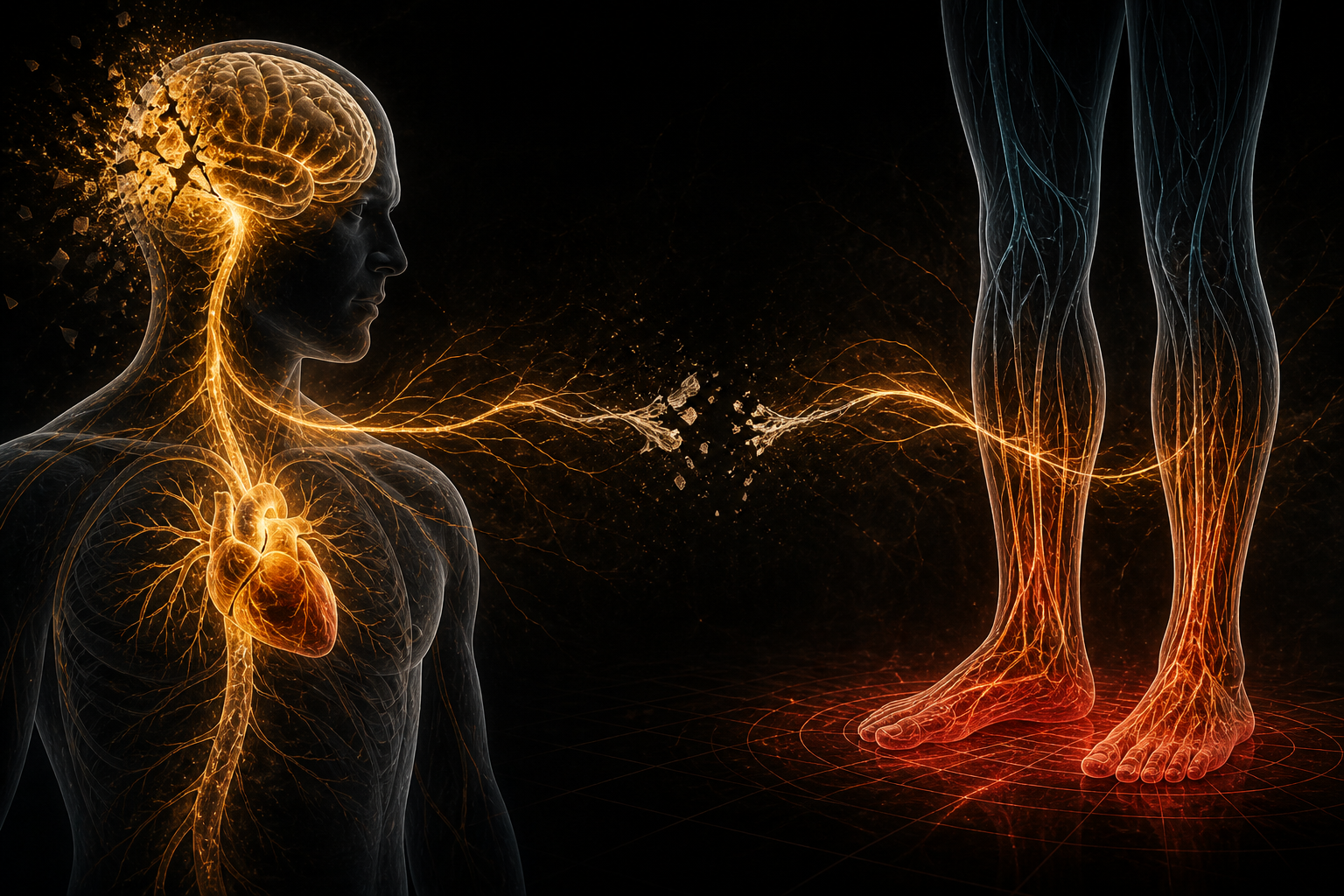
Neuropathic POTS, sometimes referred to as neurogenic POTS), is a form of dysautonomia involving impaired regulation of vascular tone, particularly in the lower extremities. Neuropathic POTS is the most common subtype of Postural Orthostatic Tachycardia Syndrome, affecting approximately 50% of diagnosed patients.
This reflects dysfunction of the neurocardiac axis, the communication system between the brain, heart, and blood vessels that regulates circulation and cardiovascular response to posture.
When this system is not functioning properly, blood does not circulate efficiently when upright. Blood can pool in the lower body, reducing return to the heart and triggering a compensatory increase in heart rate.
👉 Learn how this system works: → Understanding the Brain-Heart Connection
What This Means Clinically
Neuropathic POTS is not simply a heart rate condition. It is a disorder of circulatory control and autonomic signaling.
This distinction is important because:
• The primary issue is vascular regulation, not cardiac structure
• Symptoms are driven by impaired blood distribution, not lack of effort
• Traditional approaches that focus only on heart rate often miss the underlying mechanism
While it shares the core hallmark of POTS—a heart rate increase of 30+ bpm within 10 minutes of standing—the neuropathic subtype often presents with specific physical markers:
Acrocyanosis: A distinctive dark red, blue, or purple discoloration of the feet and lower legs when standing, often accompanied by skin that is cold to the touch.
Sudomotor Dysfunction: Patchy loss of sweating (anhidrosis) in the lower extremities because the same nerves that control blood vessels also regulate sweat glands.
Neuropathic Pain: Sensations of burning, tingling, or "electric shocks" in the hands and feet due to nerve fiber damage.
Severe Brain Fog: Cognitive difficulties that typically worsen while upright and improve upon lying down or rehydrating.
GI Dysfunction: Up to 96% of patients report issues like nausea, bloating, and constipation, which may stem from autonomic communication damage in the gut.
Common Symptoms of Neurogenic POTS
Patients with neuropathic POTS often experience symptoms that are most pronounced when upright and improve with sitting or lying down.
Common symptoms include:
While all POTS patients experience lightheadedness and a racing heart, specific signs of the neuropathic subtype include:
Acrocyanosis: A dark blue or reddish-purple discoloration of the feet and lower legs when standing, which may feel cold to the touch.
Neuropathic Pain: Burning, tingling, or "pins and needles" sensations in the hands and feet.
Sudomotor Dysfunction: Patchy loss of sweating, particularly in the lower legs, because the same small fibers control sweat glands.
Gastrointestinal Issues: Severe nausea, bloating, or constipation, potentially due to neuropathy affecting the enteric nervous system.
• Lightheadedness or dizziness with standing
• Leg heaviness, pressure, or visible blood pooling
• Fatigue that worsens throughout the day
• Brain fog or difficulty concentrating
• Exercise intolerance
• Palpitations or awareness of heart rate
Symptoms are frequently aggravated by:
• Prolonged standing
• Heat exposure
• Dehydration
• Large meals
Unique Characteristics of Neuropathic POTS
While symptoms can overlap with other forms of POTS, neuropathic patterns often demonstrate specific clinical features related to impaired vascular regulation.
These may include:
• Prominent lower extremity blood pooling
• Greater symptom severity with standing than with exertion alone
• Delayed or inadequate vasoconstriction during positional change
• Reduced peripheral vascular resistance
• Possible association with small fiber neuropathy
Clinical Context
These features reflect dysfunction in the body’s ability to regulate vascular tone, particularly in the lower extremities.
This leads to inefficient blood return to the heart and contributes directly to the symptom pattern seen in neuropathic POTS.
Important Clinical Consideration
Most patients do not present with a single isolated subtype.
Instead, they demonstrate overlapping features across multiple POTS patterns, which is why symptom-based classification alone is often insufficient.
At NeuroSport, these patterns are evaluated within the broader framework of the neurocardiac axis, allowing for a more accurate understanding of how symptoms are generated.
👉 See how these patterns are evaluated clinically: POTS Evaluation and Care →
What’s Happening Physiologically
Neuropathic POTS reflects impaired autonomic control of the peripheral vasculature, particularly in the lower extremities.
Under normal conditions, standing triggers coordinated vasoconstriction in the legs and abdomen to maintain blood pressure and support blood flow back to the heart and brain. In neuropathic POTS, this response is reduced or delayed.
Blood vessels fail to constrict effectively, leading to venous pooling in the lower body and reduced return of blood to the heart. This decreases effective circulating volume and limits cerebral perfusion. To compensate, the autonomic nervous system increases heart rate in an attempt to maintain adequate blood flow to the brain.
Key Physiological Features
• Impaired peripheral vasoconstriction
• Venous pooling in the lower extremities
• Reduced preload and effective circulating volume
• Compensatory tachycardia
• Reduced cerebral perfusion during upright posture
Splanchnic Circulation Considerations
In addition to the lower extremities, the splanchnic circulation (blood flow to the abdominal organs) plays a significant role in blood distribution.
In some patients, impaired regulation of this vascular bed can contribute to further blood sequestration when upright or after meals.
👉 Learn more about splanchnic blood flow and symptom patterns →
Clinical Interpretation
This pattern is not a primary cardiac disorder. It reflects dysfunction in how the autonomic nervous system regulates blood distribution across the vascular system. This is why symptoms are often position-dependent and why patients may feel significantly better when lying down.
Systems Perspective
Rather than viewing this as an isolated vascular issue, these findings reflect disruption within the neurocardiac axis, where central regulation, autonomic signaling, and peripheral vascular response must function together.
Concussion Can Lead to Dysautonomia
Concussion can disrupt normal autonomic nervous system function, leading to a pattern of symptoms consistent with dysautonomia.
This occurs through disturbance of the neurocardiac axis, the integrated system that regulates communication between the brain, heart, and blood vessels. Following concussion, this system may become dysregulated, resulting in impaired control of heart rate, blood pressure, and circulation, particularly during positional change or physical and cognitive stress.
How Concussion Affects Autonomic Regulation
The autonomic nervous system relies on coordinated signaling between central brain structures and peripheral cardiovascular responses. After concussion, patients may demonstrate:
• Altered heart rate variability
• Impaired blood pressure regulation
• Reduced tolerance to upright posture
• Increased symptom response to exertion
• Disruption of normal recovery patterns
These changes reflect dysfunction in central autonomic control rather than a primary cardiac abnormality.
Overlap With POTS
In some patients, post-concussion autonomic dysfunction meets clinical criteria for Postural Orthostatic Tachycardia Syndrome (POTS).
These patients may experience:
• Orthostatic tachycardia
• Lightheadedness when standing
• Fatigue and exercise intolerance
• Brain fog and cognitive fatigue
However, not all patients with post-concussion dysautonomia meet criteria for POTS, and symptom patterns may evolve over time.
Clinical Interpretation
Post-concussion dysautonomia is best understood as a systems-level disruption, not an isolated diagnosis.
Symptoms often reflect:
• Impaired integration of autonomic signaling
• Altered cardiovascular regulation
• Reduced efficiency of cerebral perfusion
At NeuroSport, this is evaluated through the framework of the neurocardiac axis, allowing for a more complete understanding of how symptoms are generated and sustained.
Why This Matters for Recovery
Recognizing autonomic involvement after concussion helps explain:
• Persistent symptoms despite normal imaging
• Difficulty with return to exercise
• Fluctuating symptom patterns
• Sensitivity to stress, heat, and activity
This understanding allows for more targeted evaluation and management rather than symptom-based treatment alone.
What to Do Next
If symptoms such as dizziness, rapid heart rate, fatigue, or exercise intolerance developed after concussion, autonomic dysfunction should be considered.
A structured evaluation can help determine whether symptoms reflect dysautonomia, POTS, or overlapping patterns of autonomic dysregulation.
Testing and Clinical Evaluation
Accurate identification of neuropathic POTS requires functional assessment of the autonomic nervous system, not symptom checklists alone. At NeuroSport, evaluation focuses on how the body regulates heart rate, blood pressure, and circulation in response to positional and physiologic stress.
Core Autonomic Testing
NASA Lean Test
The NASA Lean Test is used to assess cardiovascular response to upright posture.
This includes:
• Heart rate response to standing
• Blood pressure regulation
• Symptom development during the test
This provides objective data regarding orthostatic tolerance and autonomic regulation patterns.
Cold Pressor Test
The Cold Pressor Test is used to evaluate autonomic response to a controlled stress stimulus.
During this test:
• The body’s sympathetic response is activated
• Heart rate and blood pressure responses are observed
• Regulatory balance of the autonomic nervous system can be assessed
This test can help identify autonomic response patterns, including differentiation from hyperadrenergic features when clinically indicated.
Circulatory Pattern Assessment
Evaluation also includes clinical observation of:
• Lower extremity blood pooling
• Changes in skin color or temperature
• Symptom onset relative to posture and activity
These findings help identify patterns consistent with impaired vascular tone and blood distribution.
Laboratory Considerations
Laboratory testing may be used to support the clinical picture when indicated.
This may include:
• Electrolytes, including sodium and potassium
• Markers of hydration and volume status
• Nutritional factors
• Screening for secondary contributors when appropriate
Laboratory data is used to support clinical interpretation, not replace functional autonomic testing.
Clinical Integration
No single test defines neuropathic POTS.
Diagnosis and subtype characterization require integration of:
• Objective testing
• Symptom patterns
• Physiological response to stress and posture
At NeuroSport, this information is evaluated within the framework of the neurocardiac axis, allowing for a systems-based understanding of how symptoms are generated.
What to Do Next
If the pattern described on this page reflects your experience, the next step is not trying to determine a subtype in isolation.
Neuropathic POTS is best understood as part of a broader pattern of autonomic dysfunction, where circulation, cardiovascular response, and symptom patterns must be evaluated together.
A structured evaluation allows for:
• Objective assessment of autonomic function
• Identification of overlapping patterns
• Development of a targeted, systems-based management approach
Return to Overview
Related Topics
Many symptoms associated with neuropathic POTS reflect broader patterns of autonomic dysfunction. These resources explore common symptom drivers in more detail:
• Dizziness When Standing →
• Dysautonomia Nutrition →
• Heat Intolerance →