

Can Concussion Cause POTS?
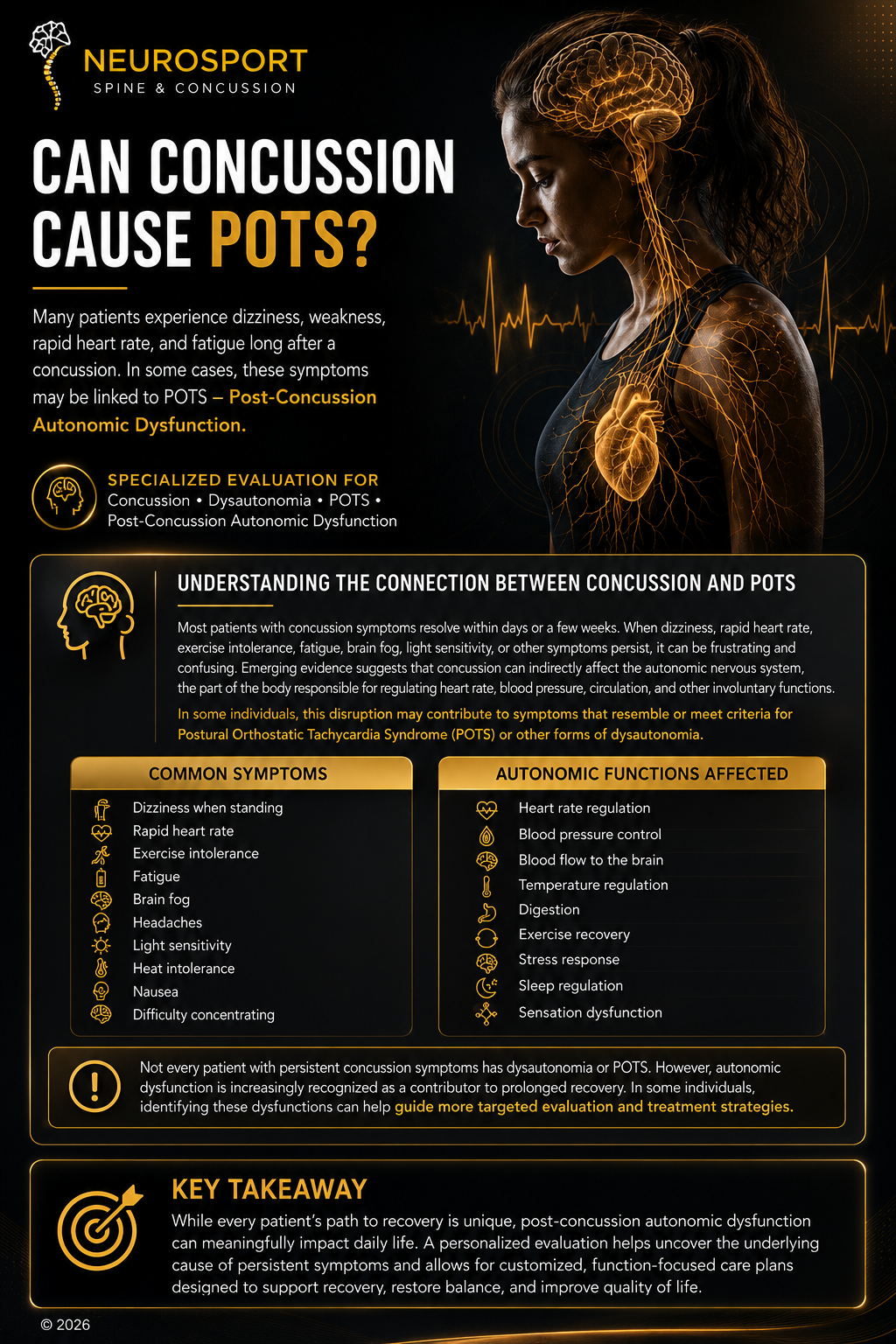
Many patients experience dizziness, exercise intolerance, rapid heart rate, fatigue, and other symptoms after a concussion. When concussion does not resolve within the expected timelines there is a reason.
Emerging evidence suggests that concussion-related dysfunction of the autonomic nervous system may contribute to these ongoing concussive symptoms and, in some individuals, may resemble or trigger POTS-like physiology.
Specialized Evaluation For
Concussion • Dysautonomia • POTS • Post-Concussion Autonomic Dysfunction
Understanding the Connection Between Concussion and POTS
Most patients with concussion symptoms resolve within days or a few weeks. When dizziness, rapid heart rate, exercise intolerance, fatigue, brain fog, light sensitivity, or other symptoms persist, it can be frustrating and confusing. Increasing evidence suggests that concussion can adversely affect the autonomic nervous system, the part of the body responsible for regulating heart rate, blood pressure, circulation, temperature regulation, digestion, and many other automatic functions.
In some individuals, this disruption may contribute to symptoms that resemble or meet criteria for Postural Orthostatic Tachycardia Syndrome (POTS) or other forms of dysautonomia.
Common Symptoms
Dizziness when standing
Rapid heart rate
Exercise intolerance
Fatigue
Brain fog
Headaches
Heat intolerance
Nausea
Difficulty concentrating
Autonomic Functions Affected
Heart rate regulation
Blood pressure control
Blood flow to the brain
Temperature regulation
Digestion
Exercise recovery
Stress response
Sleep regulation
Sensation dysfunction
Not every patient with persistent concussion symptoms has dysautonomia or POTS. However, autonomic dysfunction is increasingly recognized as a contributor to prolonged recovery in some individuals. Identifying these physiological changes can help guide more targeted evaluation and treatment strategies.
How Can a Concussion Affect the Autonomic Nervous System?
The autonomic nervous system (ANS) regulates many of the body's automatic functions, including heart rate, blood pressure, circulation, breathing, digestion, temperature regulation, and exercise recovery. Under normal circumstances, these systems work continuously in the background without conscious effort.
Current thought concludes that it is likely that concussion causes autonomic nervous system anomalies. This dysfunction accounts for many common post-concussion symptoms including headache, dizziness, cognitive impairment, mood disorders, and sleep disturbances.
A concussion can disrupt the complex neural networks responsible for autonomic regulation. Research suggests that concussion-related changes may affect communication between the brain and body, alter cerebral blood flow regulation, and impair the body's ability to appropriately respond to physical and cognitive demands. As a result, activities that were once routine may become unexpectedly difficult.
When the autonomic nervous system is not functioning optimally, patients may experience symptoms such as dizziness upon standing, rapid heart rate, fatigue, exercise intolerance, brain fog, nausea, heat intolerance, or increased symptom burden following physical or mental activity.
Why Do Symptoms Often Worsen When Standing?
Standing places unique demands on the cardiovascular and autonomic nervous systems. Gravity causes blood to shift toward the lower body, requiring rapid adjustments in heart rate, blood vessel tone, and circulation to maintain adequate blood flow to the brain.
In some individuals following concussion, these compensatory mechanisms may become less efficient. The result can be dizziness, lightheadedness, rapid heart rate, fatigue, visual disturbances, or worsening symptoms when standing upright for prolonged periods.
Why Does Exercise Sometimes Feel Different After Concussion?
Many patients assume that persistent symptoms are simply the result of being "out of shape." While physical deconditioning can contribute to symptoms in some cases, it does not fully explain the experiences of many individuals with post-concussion autonomic dysfunction.
Patients often describe a disproportionate response to physical activity, including rapid heart rate elevation, symptom flare-ups, prolonged recovery after exertion, increased fatigue, headaches, dizziness, or worsening cognitive symptoms. These responses may reflect abnormalities in autonomic regulation rather than a simple lack of fitness.
The Important Takeaway
Concussion-related autonomic dysfunction is increasingly recognized as a potential contributor to prolonged recovery. While not every patient with persistent concussion symptoms has dysautonomia or POTS, evaluating autonomic function can provide important clinical information when symptoms persist beyond the expected recovery timeline.
Can Concussion Trigger POTS?
The short answer is yes, concussion can be associated with the development of POTS-like physiology and other forms of dysautonomia in some individuals. While researchers continue to investigate the exact mechanisms involved, an increasing body of evidence supports a relationship between concussion, autonomic dysfunction, and orthostatic intolerance.
What Is POTS?
Postural Orthostatic Tachycardia Syndrome (POTS) is a disorder of the autonomic nervous system characterized by an excessive increase in heart rate when moving from a lying or seated position to standing. Common symptoms may include:
Rapid heart rate
Dizziness or lightheadedness
Fatigue
Brain fog
Exercise intolerance
Palpitations
Nausea
Headaches
Heat intolerance
Although POTS is often discussed as a distinct diagnosis, many of these symptoms overlap with those experienced by patients recovering from concussion.
What Does the Research Show?
Multiple studies have identified abnormalities in autonomic nervous system function following concussion. Researchers have reported alterations in heart rate regulation, blood pressure control, cerebral blood flow, exercise tolerance, and orthostatic responses in some patients with persistent post-concussion symptoms.
Some individuals develop symptoms that closely resemble POTS, while others demonstrate measurable autonomic dysfunction without meeting formal diagnostic criteria for POTS. This suggests that concussion-related autonomic dysfunction may exist along a spectrum rather than as a single condition.
Does Every Patient With Persistent Symptoms Have POTS?
No.
Many patients with prolonged concussion symptoms do not have POTS. Persistent symptoms can result from multiple factors, including vestibular dysfunction, visual disturbances, migraine physiology, cervical spine injury, sleep disruption, psychological stress, exercise intolerance, or autonomic dysfunction.
This is why a comprehensive evaluation is important. Similar symptoms can arise from very different physiological mechanisms.
Why the Distinction Matters
Identifying autonomic dysfunction can change the treatment approach.
A patient whose symptoms are being driven primarily by autonomic dysfunction may benefit from different interventions than a patient whose symptoms are primarily vestibular, visual, cervical, or migraine-related. Understanding the physiological contributors to ongoing symptoms helps guide more targeted and individualized care.
Can Post-Concussion POTS Improve?
In many cases, yes.
Some patients experience gradual improvement as autonomic function recovers. Others may benefit from interventions designed to improve autonomic regulation, exercise tolerance, hydration status, sleep quality, and overall physiological resilience.
Recovery timelines vary considerably from person to person, making accurate assessment and individualized management important components of care.
Not every patient with persistent concussion symptoms has POTS. However, concussion-related autonomic dysfunction is increasingly recognized as a potential contributor to prolonged recovery. When symptoms such as dizziness, rapid heart rate, exercise intolerance, fatigue, brain fog, or orthostatic intolerance persist, evaluation of autonomic function may provide important clinical insights and help guide treatment decisions.
How Is Post-Concussion Dysautonomia Diagnosed?
Persistent symptoms following concussion can arise from many different physiological processes. Dizziness, fatigue, brain fog, exercise intolerance, headaches, rapid heart rate, and lightheadedness may be caused by vestibular dysfunction, visual disturbances, migraine physiology, cervical spine injury, sleep disruption, autonomic dysfunction, or a combination of factors.
Because symptom overlap is common, diagnosis cannot be based on symptoms alone.
A Comprehensive Clinical Evaluation
Evaluation begins with a detailed review of symptoms, medical history, injury characteristics, and recovery patterns. Particular attention is given to symptoms that worsen with standing, physical activity, heat exposure, dehydration, or prolonged cognitive effort.
Common findings that may raise suspicion for autonomic dysfunction include:
Dizziness when standing
Rapid heart rate
Exercise intolerance
Excessive fatigue
Brain fog
Heat intolerance
Lightheadedness
Nausea
Symptom flares following exertion
Orthostatic Testing
Because many symptoms occur when the body transitions from lying or sitting to standing, orthostatic testing is often an important component of evaluation.
At NeuroSport, assessment may include:
Orthostatic vital signs
Active Stand Testing
NASA Lean Testing
Symptom assessment during positional change
Exercise response evaluation
These assessments help determine how the cardiovascular and autonomic nervous systems respond to changes in posture and physical demand.
Looking Beyond Symptoms
One of the challenges of concussion care is that two patients may report nearly identical symptoms while having very different underlying physiological contributors. For this reason, objective testing can provide valuable information that helps guide diagnosis, treatment planning, and recovery strategies.
Identifying the Right Treatment Path
Not every patient with persistent concussion symptoms has autonomic dysfunction. However, when autonomic impairment is identified, treatment strategies can be tailored to address the physiological factors contributing to ongoing symptoms. Understanding how the body responds to standing, exercise, and daily activity helps clinicians develop a more individualized approach to recovery.
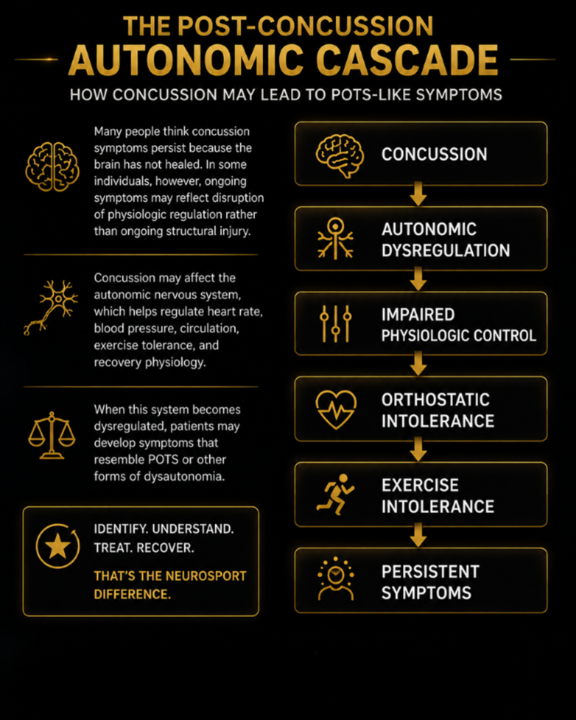
The Post-Concussion Autonomic Cascade
Many people think concussion symptoms persist because the brain has not healed. In some individuals, however, ongoing symptoms may reflect disruption of physiologic regulation rather than ongoing structural injury.
Concussion may affect the autonomic nervous system, which helps regulate heart rate, blood pressure, circulation, exercise tolerance, and recovery physiology.
When this system becomes dysregulated, patients may develop symptoms that resemble POTS or other forms of dysautonomia.
Why This Matters
Many patients with persistent concussion symptoms are told that imaging is normal, the concussion has healed, or that additional time is all that is needed.
While this may be true for many individuals, others continue to experience dizziness, rapid heart rate, exercise intolerance, fatigue, brain fog, or difficulty returning to normal activities despite otherwise reassuring findings. In some cases, the issue may not be ongoing structural injury. The challenge may involve how physiologic systems are functioning and regulating activity, recovery, circulation, and exercise tolerance.
Understanding this distinction may help explain why symptoms persist even when traditional testing appears normal.
Treatment Approaches for Post-Concussion Dysautonomia and POTS
Treatment of post-concussion dysautonomia focuses on identifying and addressing the physiological factors contributing to ongoing symptoms. Because no two patients present exactly alike, treatment strategies must be individualized based on clinical findings, symptom patterns, and objective testing.
The goal is not simply symptom management. The goal is to improve autonomic regulation, exercise tolerance, functional capacity, and quality of life.
Hydration and Electrolytes
Adequate hydration and electrolyte intake are often foundational components of treatment. Dehydration, inadequate sodium intake, and low blood volume may worsen symptoms in susceptible individuals. For some patients, increasing fluid and electrolyte intake can improve orthostatic tolerance, reduce dizziness, and support daily functioning.
Sleep Optimization
Sleep plays a critical role in neurological recovery and autonomic regulation. Poor sleep quality can contribute to fatigue, cognitive dysfunction, exercise intolerance, and symptom exacerbation.
Identifying and addressing sleep disturbances is frequently an important part of the recovery process.
Exercise and Activity Progression
Historically, prolonged rest was commonly recommended following concussion. Current evidence suggests that carefully monitored, symptom-limited activity and exercise progression are often more effective than prolonged inactivity.
Exercise may help improve:
Autonomic regulation
Cardiovascular conditioning
Exercise tolerance
Blood volume regulation
Recovery confidence
Functional capacity
The appropriate type, intensity, and progression of exercise should be individualized based on the patient's clinical presentation and physiological response.
Addressing Contributing Factors
Persistent symptoms may involve more than autonomic dysfunction alone. Comprehensive management may also include evaluation and treatment of:
Vestibular dysfunction
Visual dysfunction
Cervical spine disorders
Migraine physiology
Sleep disorders
Exercise intolerance
Psychological stressors
Because multiple systems can contribute to symptom persistence, successful treatment often requires a comprehensive approach.
Individualized Care Matters
Patients with similar symptoms may have very different underlying physiological contributors. For this reason, treatment plans should be guided by clinical evaluation and objective findings rather than symptoms alone. The most effective recovery strategies are typically those tailored to the individual rather than a one-size-fits-all approach.
Recovery Is Possible
Many patients with post-concussion autonomic dysfunction experience meaningful improvement over time. While recovery timelines vary, identifying the physiological contributors to ongoing symptoms can help guide more targeted treatment strategies and provide a clearer path forward.
Frequently Asked Questions About Concussion and POTS
Can a concussion cause POTS?
Yes. Research increasingly suggests that concussion can be associated with autonomic dysfunction, including symptoms that resemble or meet criteria for Postural Orthostatic Tachycardia Syndrome (POTS). Not every patient develops POTS after concussion, but autonomic impairment is increasingly recognized as a potential contributor to prolonged recovery.
Can a concussion cause dysautonomia without causing POTS?
Yes. Dysautonomia is a broad term that refers to dysfunction of the autonomic nervous system. Some patients develop measurable autonomic abnormalities without meeting formal diagnostic criteria for POTS. Symptoms may still include dizziness, fatigue, exercise intolerance, brain fog, rapid heart rate, or heat intolerance.
What are the symptoms of post-concussion dysautonomia?
Common symptoms may include:
Dizziness or lightheadedness
Rapid heart rate
Exercise intolerance
Fatigue
Brain fog
Difficulty concentrating
Heat intolerance
Headaches
Nausea
Difficulty tolerating prolonged standing
Symptoms often worsen with physical exertion, cognitive activity, heat exposure, dehydration, or prolonged upright posture.
How long does post-concussion dysautonomia last?
Recovery timelines vary significantly from person to person. Some individuals improve within weeks or months, while others experience symptoms for much longer periods. Early identification of contributing factors and appropriate treatment strategies may help support recovery. Research suggests that earlier engagement with a concussion specialist is directly related to faster recovery timelines. Expertise in managing these types of patients is a fundamental skilled service at NeuroSport.
Is dizziness after concussion always caused by POTS?
No. Dizziness following concussion can result from multiple factors, including central vestibular dysfunction, visual disturbances, cervical spine disorders, migraine physiology, autonomic dysfunction, or combinations of these conditions. Central Vestibular Dysfunction occurs when the brain or central nervous system (specifically areas like the brainstem and cerebellum) struggles to process the balance signals sent from the inner ears. A comprehensive evaluation is often necessary to determine the dizziness causation.
Can exercise help post-concussion dysautonomia?
For many patients, appropriately prescribed and monitored exercise may help improve autonomic regulation, exercise tolerance, and overall function. However, exercise recommendations should be individualized because patients with autonomic dysfunction often respond differently to physical activity than healthy individuals.
Can children and adolescents develop POTS after concussion?
Yes. Dysautonomia and POTS can occur in adolescents following concussion. Symptoms may include dizziness, fatigue, exercise intolerance, rapid heart rate, headaches, brain fog, and difficulty returning to school, sports, or normal activities. Concussion is recognized as the second leading trigger of pediatric POTS. More than 70% of youth with persistent post-concussion symptoms undergoing testing of the autonomic nervous system met the criteria for POTS.
How is post-concussion dysautonomia diagnosed?
Diagnosis typically involves a detailed clinical history, symptom assessment, orthostatic vital signs, and evaluation of autonomic responses to positional changes and activity. Additional testing may be performed based on individual clinical findings.
When should I seek evaluation?
Consider evaluation if your symptoms such as dizziness, rapid heart rate, fatigue, exercise intolerance, brain fog, or difficulty tolerating standing persist beyond the expected recovery period of 2-3 weeks or if your symptoms interfere with school, work, sports, or daily activities. When dysautonomia is suspected following concussion, established NeuroSport autonomic function evaluation (batteries of examination procedures) are more appropriate than symptom-based evaluation alone.
Request an Evaluation
Persistent symptoms after concussion can be frustrating, particularly when recovery does not follow the expected timeline. Dizziness, exercise intolerance, rapid heart rate, fatigue, brain fog, and difficulty returning to normal activities may indicate that additional physiological factors are contributing to ongoing symptoms.
At NeuroSport, our evaluation extends beyond the diagnosis of concussion alone. We assess the potential role of autonomic dysfunction, dysautonomia, POTS, exercise intolerance, vestibular dysfunction, visual disturbances, cervical spine disorders, and other factors that may influence recovery.
Patients May Benefit From Evaluation If They Experience:
Persistent symptoms following concussion
Dizziness or lightheadedness when standing
Rapid heart rate or palpitations
Exercise intolerance
Fatigue that limits daily activities
Brain fog or difficulty concentrating
Difficulty returning to school, work, or sports
Symptoms that worsen despite traditional concussion treatment
What to Expect
A comprehensive evaluation at NeuroSport typically includes:
Detailed clinical history
Concussion assessment
Cranial nerve evaluation
Orthostatic vital sign evaluation
Active Stand Testing
NASA Lean Testing
Vestibular function evaluation
Assessment of exercise tolerance
Evaluation of contributing physiological factors
Individualized treatment recommendations
Our Goal
Our goal is to identify the factors contributing to ongoing symptoms and develop a personalized plan to help patients safely return to school, work, sport, and daily life.