


POTS Summer Survival Guide
Summer can be one of the most challenging times of year for people living with POTS and dysautonomia. Learn why heat worsens symptoms and discover practical strategies for hydration, exercise, travel, and symptom prevention.
Heat impacts Postural Orthostatic Tachycardia Syndrome (POTS) patients primarily because high temperatures cause blood vessels to widen or open up (vasodilation) to drive blood to the surface of the skin for cooling purposes. When the return flow to the heart decreases the body must increase the heart rate to maintain brain blood flow.
The resultant dehydration and lower blood volume results in increased orthostatic intolerance, which makes you feel dizzy, fatigued, or close to fainting especially upon standing.
Key Takeaway
Heat Doesn't Cause POTS. It Magnifies It.
Many people with POTS and dysautonomia notice worsening symptoms during the summer months. Heat exposure increases blood vessel dilation, promotes blood pooling in the legs and abdomen, reduces blood return to the heart, and forces the autonomic nervous system to work harder to maintain blood pressure and cerebral blood flow.
For some patients, this results in dizziness, fatigue, brain fog, palpitations, nausea, exercise intolerance, and near-fainting episodes. Understanding the physiologic relationship between heat, hydration, blood volume, and autonomic regulation is the first step toward reducing summer symptom flares.
Why Heat Makes POTS Worse
Most people think of heat as an environmental problem.
For individuals with POTS and dysautonomia, heat is also a circulatory problem. The body relies on the autonomic nervous system to regulate temperature. When temperatures rise, blood vessels near the surface of the skin widen in an effort to release heat. This process is known as vasodilation and is one of the body's primary cooling mechanisms.
For someone with a healthy autonomic nervous system, this response is generally well tolerated. For someone with POTS, the situation is often very different.
As blood vessels widen, a greater volume of blood becomes trapped in the lower extremities and abdomen. This phenomenon, known as venous pooling, reduces the amount of blood returning to the heart. When less blood returns to the heart, stroke volume decreases. To compensate, the body increases heart rate in an attempt to maintain adequate blood flow to the brain and vital organs.
This physiologic cascade can trigger a wide range of symptoms including:
Dizziness
Lightheadedness
Brain fog
Fatigue
Palpitations
Nausea
Exercise intolerance
Presyncope
Syncope
The hotter the environment becomes, the harder the autonomic nervous system must work to maintain stability.
The Heat-POTS Cycle
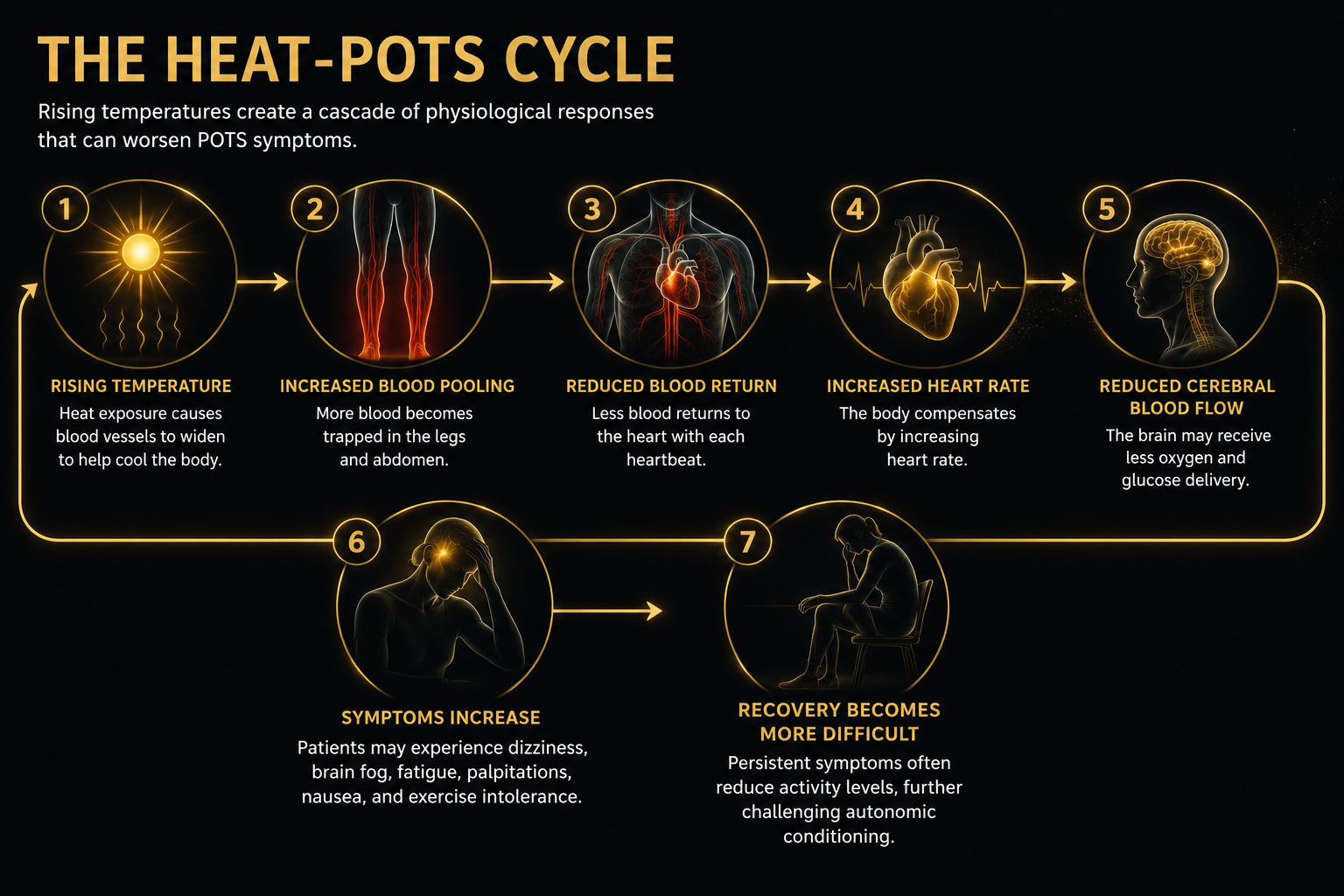
The Heat-POTS Cycle
Rising temperatures create a physiologic cascade that can significantly worsen symptoms in individuals with POTS and dysautonomia. Heat exposure causes blood vessels to dilate, increasing blood pooling in the lower extremities and abdomen. As less blood returns to the heart, the body compensates by increasing heart rate to maintain blood flow to the brain and vital organs. The resulting reduction in cerebral perfusion may contribute to dizziness, brain fog, fatigue, palpitations, nausea, and exercise intolerance. Understanding this cycle helps explain why many patients experience symptom flares during hot weather and highlights the importance of hydration, electrolyte replacement, cooling strategies, and activity modification during the summer months.
Why Hydration Alone Is Often Not Enough
One of the most common misconceptions in POTS and dysautonomia management is that symptoms can be controlled simply by drinking more water. While hydration is important, water alone is most often insufficient.
Many patients tell us they are drinking large amounts of water every day but continue to experience dizziness, fatigue, brain fog, palpitations, and exercise intolerance. In some cases, increasing water intake without addressing sodium and electrolyte balance may provide little benefit and occasionally worsen symptoms.
The reason is simple: the goal is not merely to consume fluids. The goal is to increase and maintain circulating blood volume.
Water Must Be Retained to Be Useful
When you drink water, your body must absorb it and retain it within the bloodstream. Without adequate sodium, much of the water consumed may be rapidly excreted through the kidneys. This limits the ability of hydration alone to expand blood volume and improve orthostatic tolerance.
For many patients with POTS, the challenge is not simply dehydration. It is inadequate circulating blood volume combined with abnormal autonomic regulation.
Why Sodium Matters
Sodium plays a critical role in maintaining blood volume and supporting normal cardiovascular function.
Adequate sodium intake helps:
Increase circulating blood volume
Improve venous return to the heart
Support blood pressure regulation
Reduce orthostatic symptoms
Improve exercise tolerance
Enhance fluid retention
This is one reason many patients with POTS report strong salt cravings. In some cases, the body may be attempting to compensate for low blood volume and impaired circulatory regulation.
Electrolytes Are More Than Sodium
Although sodium is often the primary focus, other electrolytes also contribute to normal physiologic function.
Electrolytes help regulate:
Nerve signaling
Muscle contraction
Cardiovascular function
Fluid balance
Blood pressure regulation
Significant sweating during hot weather can result in the loss of sodium, potassium, chloride, and other important electrolytes. Replacing water without replacing these losses may contribute to ongoing symptoms.
Why Summer Creates Additional Challenges
Hot weather increases fluid requirements for most people. For individuals with POTS and dysautonomia, the challenge is magnified.
During periods of heat exposure:
Sweating increases fluid loss
Electrolyte losses accelerate
Blood vessels dilate
Blood pooling increases
Heart rate rises
Orthostatic symptoms worsen
This combination can create a cycle in which symptoms become progressively more difficult to control despite apparently adequate water intake.
Practical Hydration Strategies
Many patients benefit from focusing on hydration quality rather than hydration quantity alone.
Strategies commonly recommended include:
Consistent fluid intake throughout the day
Regular electrolyte replacement
Adequate sodium consumption as directed by your healthcare provider
Hydration before outdoor activities
Increased fluid intake during hot weather
Avoiding prolonged periods without eating or drinking
Patients often notice the greatest benefit when hydration, sodium intake, exercise, sleep, and autonomic rehabilitation are addressed together rather than in isolation.
The Bottom Line
For many individuals with POTS and dysautonomia, successful hydration involves far more than simply drinking water. Improving symptoms often requires a comprehensive approach that supports blood volume, electrolyte balance, cardiovascular function, and autonomic regulation.
Understanding the difference between fluid intake and effective hydration is one of the most important steps toward improving summer symptom control.
Practical Strategies for Staying Cool
Many people with POTS and dysautonomia cannot avoid hot weather entirely. The goal is not to eliminate heat exposure, but to reduce its physiologic impact and prevent symptom escalation. Small adjustments often make a meaningful difference.
Start Hydrating Before You Need It
One of the most common mistakes is waiting until symptoms develop before increasing fluids and electrolytes. Hydration works best when it is proactive rather than reactive. Consider increasing fluids and electrolytes:
Before outdoor activities
Before travel
Before exercise
Before attending sporting events, festivals, or other outdoor gatherings
During periods of extreme heat
Plan Activities Around Temperature
Many patients tolerate activity significantly better during cooler parts of the day. Whenever possible:
Exercise early in the morning
Schedule outdoor activities around midday heat
Utilize shaded areas
Take frequent cooling breaks
Avoid prolonged exposure during heat advisories
If you do not feel well, recognize this is not the day for exercise
Dress for Heat Management
Clothing can significantly influence body temperature regulation. Many patients benefit from:
Lightweight fabrics
Moisture-wicking materials
Light-colored clothing
Wide-brimmed hats
UV-protective apparel
Consider cooling towels or cooling vests
Compression garments may improve orthostatic symptoms but can become uncomfortable during extreme heat. Patients should work with their healthcare provider to determine the most appropriate strategy.
Use External Cooling Strategies
Cooling the body from the outside can reduce physiologic stress on the autonomic nervous system. Helpful options include:
Cooling towels
Neck cooling wraps
Portable fans
Air-conditioned environments
Cooling vests
Cold beverages
Cold water immersion of the hands and forearms
Many patients find that cooling the neck, face, and forearms provides rapid symptom relief.
Respect Early Warning Signs
Symptoms often worsen gradually before a significant flare occurs. Common warning signs include:
Increasing fatigue
Rising heart rate
Brain fog
Dizziness
Facial flushing
Excessive sweating
Nausea
Reduced exercise tolerance
Recognizing these early signals allows intervention before symptoms become severe.
Give Yourself Permission to Modify Plans
Many individuals with POTS struggle with the frustration of having to alter activities because of heat. Adjusting plans is not failure. Managing heat exposure is a legitimate part of managing a chronic autonomic condition. Taking breaks, moving indoors, increasing recovery time, or postponing activities may prevent a mild symptom increase from becoming a significant flare.
Remember the Goal
The goal is not to avoid life. The goal is to stay active while minimizing unnecessary physiologic stress. With thoughtful planning, many individuals with POTS and dysautonomia continue to travel, exercise, attend social events, work, and participate in activities they enjoy throughout the summer months.
Summer Travel Tips for People with POTS and Dysautonomia
Travel can be challenging for individuals with POTS and dysautonomia, particularly during the summer months. Long periods of sitting, standing in lines, carrying luggage, irregular meals, dehydration, heat exposure, and poor sleep can all place additional stress on the autonomic nervous system.
Fortunately, a little preparation can often prevent a major symptom flare.
Start Preparing Before You Travel
One of the most effective strategies is to begin preparing before the day of travel. Many patients benefit from:
Increasing fluid intake 24 to 48 hours before travel
Maintaining electrolyte intake
Prioritizing sleep before departure
Avoiding excessive alcohol consumption
Maintaining regular meals
Waiting until symptoms develop during travel is often too late.
Air Travel and POTS
Air travel presents several unique challenges. Common triggers include:
Early morning departures
Long security lines
Prolonged standing
Carrying luggage
Reduced fluid intake
Fatigue
Consider:
Arriving early to avoid rushing
Bringing electrolyte packets in your carry-on bag
Refilling water bottles after security
Requesting assistance if prolonged walking is difficult
Standing up periodically during longer flights
Many patients find that compression garments are particularly helpful during air travel.
Road Trips
Extended car rides can create a different set of challenges. Remaining seated for prolonged periods may contribute to:
Blood pooling
Stiffness
Fatigue
Orthostatic symptoms upon standing
When possible:
Stop every 1 to 2 hours
Walk briefly
Perform calf muscle contractions
Hydrate consistently
Avoid becoming overheated inside the vehicle
Summer Vacations and Outdoor Activities
Vacations often combine several autonomic stressors at the same time:
Heat
Increased activity
Dehydration
Poor sleep
Dietary changes
Many patients do better when they intentionally pace activities rather than trying to keep up with everyone else. Building recovery periods into the schedule often allows greater participation overall.
Theme Parks, Festivals, and Sporting Events
Large outdoor events can be particularly difficult because they combine:
Heat exposure
Prolonged standing
Crowds
Walking
Limited access to fluids
Loud environments
Limited places to cool off or sit down
Helpful strategies include:
Bringing electrolytes
Utilizing cooling towels
Identifying shaded areas
Taking scheduled breaks
Using mobility assistance when appropriate
Avoiding peak heat hours
Recover before you are too far down the flare pathway
Many patients find that early arrival and frequent cooling breaks significantly
|improve tolerance.
Know Your Personal Triggers
Every patient is different. Some struggle primarily with heat.
|Others are more sensitive to:
Sleep disruption
Prolonged standing
Travel stress
Dehydration
Irregular meals
Understanding your individual triggers allows you to plan ahead
and reduce the likelihood of a significant flare.
The Goal Is Participation, Not Perfection
Living with POTS does not mean avoiding travel or summer activities.
The goal is to participate as fully as possible while respecting the limits imposed by the autonomic nervous system. With preparation, pacing, hydration, electrolyte support, and cooling strategies, many patients are able to enjoy travel, vacations, family events, and outdoor activities while minimizing symptom exacerbation.
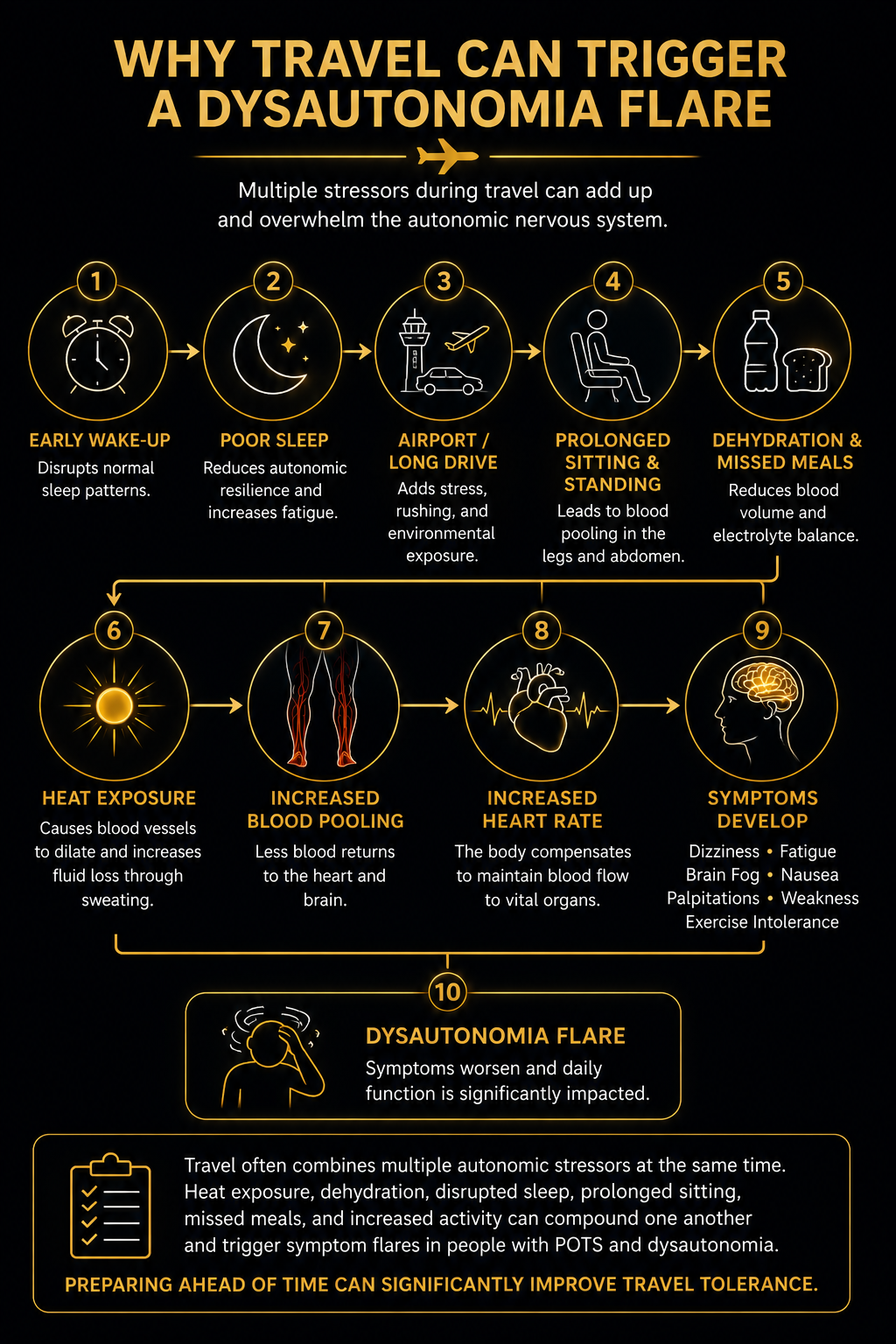
Travel often combines multiple autonomic stressors at the same time. Heat exposure, dehydration, disrupted sleep, prolonged sitting, missed meals, and increased activity can compound one another and trigger symptom flares in people with POTS and dysautonomia. Preparing ahead of time can significantly improve travel tolerance.
Recognizing a Heat-Related Dysautonomia Flare
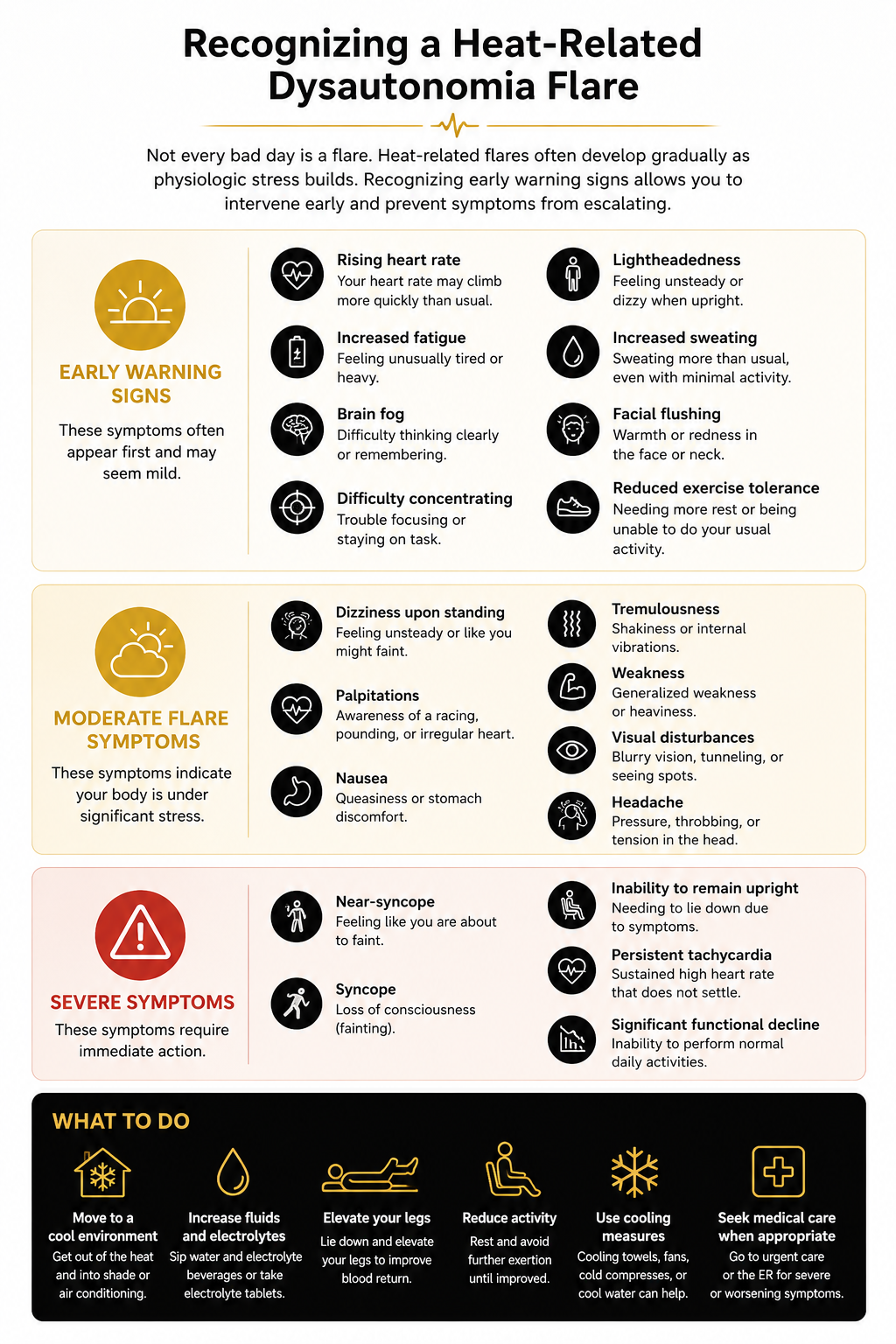
Not every difficult day represents a true dysautonomia flare. However, hot weather can rapidly increase physiologic stress and push an already challenged autonomic nervous system beyond its ability to compensate.
One of the most valuable skills patients can develop is recognizing the early warning signs of a flare before symptoms become severe.
Early Warning Signs
Many heat-related flares begin subtly. Common early symptoms include:
Unusual fatigue
Increased heart rate
Brain fog
Difficulty concentrating
Feeling "off" or unusually drained
Increased sweating
Facial flushing
Mild dizziness
Reduced exercise tolerance
Patients often describe these symptoms as feeling as though their body is working harder than normal to perform routine activities.
Moderate Flare Symptoms
As physiologic stress increases, symptoms may become more noticeable and begin interfering with daily function. Common symptoms include:
Lightheadedness when standing
Palpitations
Nausea
Tremulousness or shakiness
Weakness
Visual disturbances
Headache
Increased heat intolerance
Difficulty remaining active
At this stage, continuing to push through symptoms often leads to further deterioration.
Severe Symptoms
In some individuals, particularly during prolonged heat exposure or dehydration,
symptoms can become severe. These may include:
Near-fainting episodes
Fainting
Inability to remain upright
Marked tachycardia
Significant cognitive dysfunction
Severe weakness
Persistent nausea
Inability to complete normal daily activities
Severe symptoms should never be ignored.
What To Do If Symptoms Begin Increasing
The earlier intervention begins, the easier it is to regain control of symptoms. If you notice a developing flare:
Move to a cooler environment.
Stop unnecessary physical activity.
Increase fluids and electrolytes.
Elevate your legs if possible.
Use cooling strategies such as fans, cooling towels, air conditioning, or cold beverages.
Avoid additional heat exposure until symptoms improve.
Many patients find that prompt action during the early stages of a flare can prevent progression to more severe symptoms.
Listen to Your Body
Many individuals with POTS and dysautonomia become frustrated when symptoms force them to slow down. However, heat-related flares are often easier to prevent than they are to reverse. Recognizing early warning signs, respecting physiologic limits, and implementing cooling and hydration strategies can help reduce the severity and duration of summer symptom exacerbations.
Activity Is Not the Enemy
The goal is not to avoid activity. The goal is to recognize when the autonomic nervous system needs support before symptoms become overwhelming.
When Heat Intolerance May Signal a Bigger Problem
Most episodes of heat intolerance in people with POTS and dysautonomia improve with cooling, hydration, electrolyte replacement, and rest. However, not every worsening symptom should automatically be attributed to dysautonomia.
New or significantly worsening symptoms deserve attention.
Seek Prompt Medical Evaluation If You Experience:
Chest pain or chest pressure
Significant shortness of breath
New neurologic symptoms
Loss of consciousness without warning
Repeated fainting episodes
Persistent vomiting or inability to maintain hydration
Severe weakness that does not improve with rest
Rapidly worsening symptoms
Symptoms that feel substantially different from your usual pattern
Heat Illness and Dysautonomia Can Overlap
Individuals with POTS and dysautonomia may be at increased risk for heat-related illness because the autonomic nervous system plays a central role in temperature regulation. Symptoms such as:
Dizziness
Fatigue
Headache
Nausea
Elevated heart rate
can occur in both dysautonomia flares and heat-related illness. If symptoms are severe, progressive, or do not respond to cooling and hydration, medical evaluation should be considered.
Know Your Baseline
One of the most valuable tools in managing dysautonomia is understanding your normal symptom pattern. Ask yourself:
Is this symptom typical for me?
Is it occurring more intensely than usual?
Is recovery taking longer than expected?
Am I responding to the strategies that normally help?
When symptoms deviate significantly from your usual baseline, it is reasonable to seek medical advice.
Trust Your Instincts
Patients living with dysautonomia often become highly attuned to their body's warning signals.
If something feels significantly different, more severe, or concerning, trust that instinct.
Seeking medical attention when necessary is not overreacting. It is an important part of safely managing a chronic autonomic condition.
Most importantly, remember that while summer can be challenging, heat intolerance can often be managed successfully through preparation, hydration, cooling strategies, pacing, and a better understanding of how your autonomic nervous system responds to environmental stress.
Living Well with POTS During the Summer
For many people with POTS and dysautonomia, summer can feel like a season of limitations. Activities that once seemed routine may require additional planning, and rising temperatures can create understandable frustration when symptoms worsen.
It is important to remember that heat intolerance does not mean you are failing, becoming weaker, or moving backward in your recovery. Heat places additional demands on the autonomic nervous system. Even individuals who are making excellent progress may notice temporary symptom increases during periods of extreme weather.
Focus on Progress, Not Perfection
Recovery from dysautonomia is rarely linear. Many patients experience:
Good days and difficult days
Seasonal fluctuations
Temporary setbacks
Periods of rapid improvement followed by plateaus
These fluctuations are common and do not necessarily indicate that treatment is failing or that recovery has stopped.
Small Adjustments Often Produce Big Results
Many patients find that symptom control improves substantially when they consistently apply the fundamentals:
Adequate hydration
Electrolyte replacement
Appropriate sodium intake
Exercise progression
Sleep optimization
Heat management strategies
Activity pacing
These interventions may seem simple, but they often provide the foundation for long-term improvement.
Build a Summer Plan
Rather than waiting for symptoms to occur, consider creating a strategy before temperatures rise. Ask yourself:
How will I stay hydrated?
What cooling strategies work best for me?
How will I modify exercise during heat waves?
What will I do if symptoms begin increasing?
How can I prepare for travel and outdoor activities?
Patients who develop a plan ahead of time often experience fewer and less severe symptom flares.
Remember the Goal
The goal is not to avoid summer. The goal is to remain active, engaged, and successful while understanding the unique challenges that heat creates for the autonomic nervous system.
With preparation, education, and appropriate support, many individuals with POTS and dysautonomia continue to travel, exercise, work, attend school, and participate fully in the activities that matter most to them.
Take the Next Step
If heat intolerance, dizziness, fatigue, brain fog, exercise intolerance, or unexplained symptom flares are interfering with your daily life, a comprehensive evaluation may help identify the underlying factors contributing to your symptoms.
At NeuroSport Spine and Concussion Center, we evaluate the complex relationship between the autonomic nervous system, cardiovascular regulation, concussion, vestibular function, exercise intolerance, and dysautonomia. Our goal is to help patients better understand their condition and develop individualized strategies to improve function and quality of life.
Further Reading
Continue exploring related topics:
Key Takeaway
Heat intolerance is one of the most common challenges faced by individuals living with POTS and dysautonomia. While rising temperatures can increase physiologic stress and worsen symptoms, understanding how heat affects the autonomic nervous system allows patients to take proactive steps to reduce symptom flares. Hydration, electrolyte replacement, cooling strategies, activity pacing, and early recognition of warning signs can help many individuals remain active and engaged throughout the summer months.
Take the Next Step
If heat intolerance, dizziness, fatigue, brain fog, exercise intolerance, or unexplained symptom flares are interfering with your daily life, a comprehensive evaluation may help identify the underlying factors contributing to your symptoms.
At NeuroSport Spine and Concussion Center, we evaluate the complex relationship between the autonomic nervous system, cardiovascular regulation, concussion, vestibular function, exercise intolerance, and dysautonomia. Our goal is to help patients better understand their condition and develop individualized strategies to improve function and quality of life.
Ready to Learn More?
Schedule a consultation to discuss your symptoms, review your history, and determine whether additional evaluation may be appropriate.
Schedule a Consultation